UCanMakeItIfYouTry - The Time to Relax Is When You Don't Have Time for It
Sydney J. Harris -- the celebrated American journalist and author who wrote with uncommon wisdom about the human condition for more than four decades -- gave us one of the most quietly devastating observations about modern life: the time to relax is when you don't have time for it. It sounds paradoxical. It might even sound impossible. But it is one of the most practically important truths about how human beings actually function, and most of us learn it the hard way.
The Time to Relax Is When You Don't Have Time for It
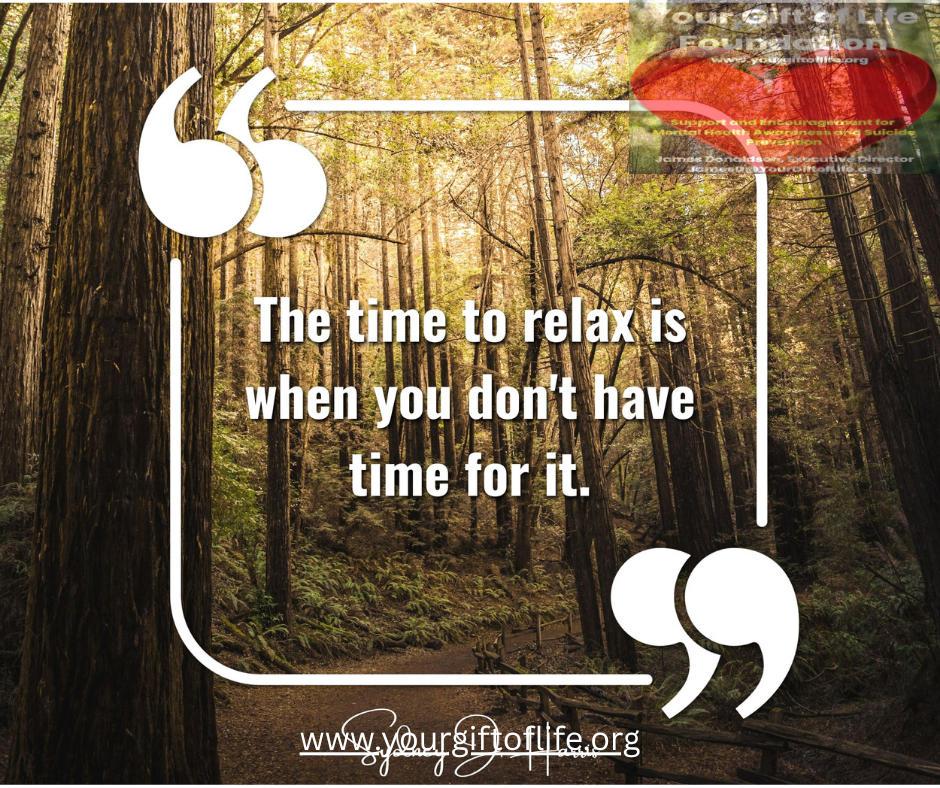
"The time to relax is when you don't have time for it." -- Sydney J. Harris
Sydney J. Harris -- the celebrated American journalist and author who wrote with uncommon wisdom about the human condition for more than four decades -- gave us one of the most quietly devastating observations about modern life: the time to relax is when you don't have time for it.
It sounds paradoxical. It might even sound impossible. But it is one of the most practically important truths about how human beings actually function, and most of us learn it the hard way.
We live in a culture that has elevated busyness to a virtue. Being busy signals importance. It signals productivity. It signals that you are serious, that you are contributing, that you are not wasting the precious hours of your life. And so we fill our schedules to capacity -- and then a little beyond capacity -- and we tell ourselves that we will rest when things slow down. When the project is finished. When the kids are older. When the holidays are over. When things settle.
Things do not settle. The project finishes and another begins. The kids grow and new demands arrive. The holidays pass and the calendar fills again. The busyness is not a temporary condition. It is the condition. And the rest that was always just around the corner never quite arrives.
Harris understood this. And his observation is not just a clever turn of phrase -- it is a prescription. The time to relax is when you don't have time for it. Not when you have earned it. Not when the to-do list is clear. Now. Especially now. Precisely because now is when you need it most.
Why Busyness Feels Like the Right Response
To understand why Harris's insight is so important, it helps to understand why we resist it so stubbornly.
When we are overwhelmed -- when the demands are piling up, the deadlines are pressing, the responsibilities are multiplying -- relaxation feels irresponsible. It feels like abandoning the post. It feels like the one thing we absolutely cannot afford to do right now.
This feeling is understandable. It is also, in most cases, wrong.
The brain under sustained stress does not perform at its best. It narrows. It becomes reactive rather than creative. It loses the capacity for the kind of broad, flexible, associative thinking that produces good decisions, innovative solutions, and genuine insight. The stressed brain is efficient at executing familiar routines, but it is poor at the higher-order thinking that most meaningful work actually requires.
This is not a moral failing. It is neuroscience. The stress response evolved to help us survive immediate physical threats -- to fight or flee, quickly and decisively. It was not designed for the sustained, complex, multi-threaded demands of modern professional and personal life. When we run on stress for too long without recovery, we are not being productive. We are running on fumes and calling it fuel.
What Relaxation Actually Does
Relaxation -- genuine relaxation, not the passive consumption of screens that passes for rest in most of our lives -- does something remarkable to the brain and body.
It activates what neuroscientists call the default mode network: the brain's resting state, which is paradoxically one of its most active and productive states. When we are not focused on a specific task, the default mode network is busy integrating information, making connections between disparate ideas, processing emotional experiences, consolidating memories, and generating the kind of creative insight that almost never arrives when we are grinding away at a problem.
Almost every person who has ever had a breakthrough idea -- the solution that suddenly appeared in the shower, the creative connection that came on a walk, the answer that arrived just as they were falling asleep -- has experienced the default mode network at work. The insight did not come because they pushed harder. It came because they stopped pushing.
Relaxation also restores the physiological resources that sustained effort depletes. Cortisol levels drop. The nervous system shifts from sympathetic activation (fight or flight) to parasympathetic activation (rest and digest). Inflammation decreases. The immune system recovers. The cardiovascular system gets a break. The body does the maintenance work that it cannot do when it is in a constant state of mobilization.
In short: relaxation is not the opposite of productivity. It is one of the foundations of it. The person who builds genuine rest into their busiest days is not being indulgent. They are being strategic.
The Compound Interest of Rest
There is another dimension to Harris's insight that is worth examining: the timing of rest matters enormously.
Rest taken proactively -- before you are depleted, as a regular practice, woven into the fabric of your days -- is far more effective than rest taken reactively, after you have run yourself into the ground. This is the difference between maintenance and repair. Maintenance is cheaper, faster, and more effective. Repair is expensive, slow, and often incomplete.
The person who takes a genuine lunch break every day, who builds a short walk into their afternoon, who protects their sleep, who takes real vacations rather than working vacations -- that person is not falling behind. They are investing in the capacity that makes everything else possible. They are practicing what performance researchers call strategic recovery: the deliberate, proactive management of energy as a resource.
The person who skips the breaks, shortens the sleep, cancels the vacation, and pushes through until they collapse is not being more productive. They are borrowing against a future that will eventually come due -- in the form of burnout, illness, diminished creativity, damaged relationships, or simply the grinding gray exhaustion of a life that has lost its color.
Harris's paradox is really a statement about compound interest. Rest taken now, when you feel you cannot afford it, pays dividends. Rest deferred indefinitely accumulates a debt that eventually becomes unpayable.
What It Looks Like in Practice
So what does it actually mean to relax when you don't have time for it? It does not mean abandoning your responsibilities or pretending the demands are not real. It means building small, genuine moments of recovery into even your most demanding days.
It means the five-minute pause -- stepping away from the screen, taking a few slow breaths, letting your attention rest on something that is not a task. Not checking your phone. Not mentally rehearsing your to-do list. Actually pausing.
It means the real lunch break -- eating away from your desk, without a screen, without a meeting, without multitasking. Just eating. Just being present to the simple act of nourishing yourself.
It means the walk -- not a walk with a podcast or a phone call, but a walk where you let your mind wander, where you notice what is around you, where you give your attention permission to roam freely rather than staying locked on the task at hand.
It means protecting your sleep -- not as a luxury but as a non-negotiable foundation. Sleep is when the brain consolidates learning, clears metabolic waste, processes emotional experience, and restores the cognitive resources that the day depleted. No amount of caffeine or willpower compensates for chronic sleep deprivation.
It means the genuine vacation -- time away from work that is actually away from work, not a working vacation with a change of scenery. Time that allows the nervous system to fully downregulate, that allows perspective to return, that allows you to remember who you are outside of your professional role.
None of these require large amounts of time. All of them require the decision to treat rest as essential rather than optional.
The Permission You Are Waiting For
Many of us are waiting for permission to rest. We are waiting for the circumstances to justify it -- for the workload to lighten, for the demands to ease, for someone to tell us that we have done enough and that it is okay to stop for a moment.
Sydney J. Harris is giving you that permission. Not when things slow down. Now. Especially now. Precisely because the demands are high and the pressure is real and the to-do list is long.
The time to relax is when you don't have time for it. Not because rest is more important than your responsibilities, but because rest is what makes you capable of meeting them -- fully, sustainably, with the clarity and creativity and presence that your work and your life deserve.
Take the break. Take it now. You cannot afford not to.
Explore Topics
Written by
James Donaldson
Content creator and writer sharing insights and stories.