UCanMakeItIfYouTry - A Well-Rested Mind Is More Efficient and Effective
Lailah Gifty Akita -- Ghanaian author, founder of Star-Seed Educational Foundation, and one of the most prolific writers on faith, purpose, and human potential -- offers a truth that our culture desperately needs to hear: a well-rested mind is more efficient and effective. Rest is not the enemy of productivity. It is the foundation of it.
A Well-Rested Mind Is More Efficient and Effective
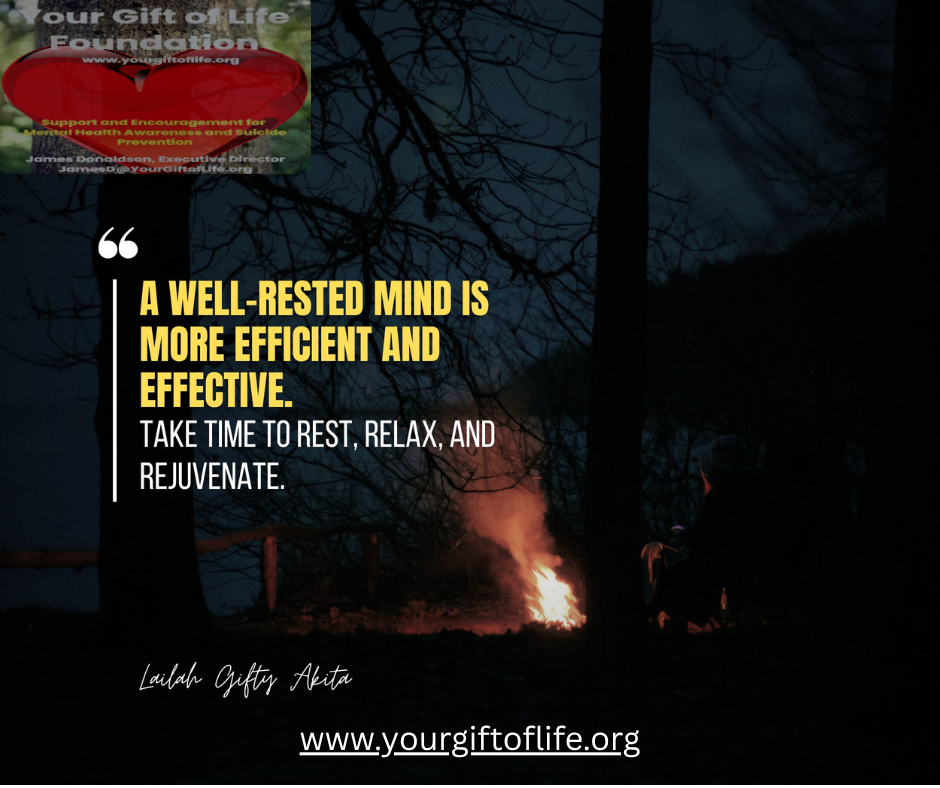
"A well-rested mind is more efficient and effective. Take time to rest, relax, and rejuvenate." -- Lailah Gifty Akita
Lailah Gifty Akita is a Ghanaian author, educator, and the founder of Star-Seed Educational Foundation, an organization dedicated to literacy and the empowerment of young people. Through her prolific writing -- dozens of books on faith, purpose, resilience, and human potential -- she has become one of the most widely quoted voices on the inner life and what it takes to live with intention. Her words are simple, direct, and consistently aimed at the same target: helping people discover what they are truly capable of.
This quote is no exception. A well-rested mind is more efficient and effective. Take time to rest, relax, and rejuvenate.
In a world that treats exhaustion as a badge of honor and rest as something you earn only after you have done enough, this is a radical statement. And it is also simply, demonstrably true.
The War on Rest
We have declared war on rest. Not consciously, not deliberately -- but the culture we have built and the values we have absorbed have made rest suspect. To rest is to fall behind. To sleep is to waste time. To relax is to be lazy. To rejuvenate is a luxury for people who have already achieved enough to afford it.
And so we push. We stay up later than we should. We skip the vacation or spend it checking email. We fill every available moment with productivity, stimulation, or at least the appearance of busyness. We wear our tiredness like a medal -- proof that we are serious, committed, working hard enough.
The irony is devastating. In our war on rest, we have made ourselves less capable of the very things we are working so hard to achieve. Because the brain does not work the way we pretend it does. It is not a machine that runs better the longer and harder you push it. It is a biological organ that requires regular maintenance -- sleep, rest, recovery -- to function at anything close to its potential.
When we deprive it of that maintenance, we do not get more done. We get less done, more slowly, with more errors, less creativity, and less satisfaction. We grind out results that a rested mind would have produced in half the time, with twice the quality. And we call this productivity.
What Rest Actually Does for the Mind
The science of sleep and rest has advanced enormously in recent decades, and what it reveals is both humbling and liberating. Rest is not passive. It is not the absence of activity. It is a period of intense, essential biological work that the brain can only do when it is not occupied with the demands of waking life.
During sleep, the brain consolidates memories -- taking the experiences and information of the day and integrating them into long-term storage. This is why you often understand something better after sleeping on it than you did the night before. The learning happened during the day, but the consolidation happened during the night.
During sleep, the brain clears waste products -- including the proteins associated with Alzheimer's disease -- through a system called the glymphatic system that is almost entirely inactive during waking hours. The brain, in other words, literally cleans itself while you sleep. Chronic sleep deprivation is not just tiredness. It is the accumulation of biological debris that impairs function and, over time, contributes to serious disease.
During rest -- even waking rest, the kind that comes from a walk, a quiet moment, a period of doing nothing in particular -- the brain shifts into what neuroscientists call the default mode network. This is the mode associated with creativity, insight, problem-solving, and the kind of thinking that connects disparate ideas in unexpected ways. The breakthrough that comes in the shower, the solution that appears on a walk, the idea that arrives just as you are falling asleep -- these are not accidents. They are the products of a rested, wandering mind doing exactly what it is designed to do when it is not being driven.
Efficiency and effectiveness -- the two qualities Akita names -- are both direct products of this biological reality. The rested mind processes information faster, makes fewer errors, sustains attention longer, and generates better solutions. The exhausted mind does all of these things worse, often dramatically so. The choice between rest and productivity is a false one. Rest is what makes genuine productivity possible.
The Three Invitations: Rest, Relax, Rejuvenate
Akita does not just say rest. She offers three words: rest, relax, and rejuvenate. Each points to something slightly different, and together they describe a complete picture of what the mind and body actually need.
Rest is the most fundamental -- the cessation of effortful activity. Sleep is the deepest form of rest, and it is non-negotiable. The research is unambiguous: most adults need seven to nine hours of sleep per night to function optimally. Not six. Not five. Seven to nine. Chronic sleep deprivation -- defined as regularly getting less than seven hours -- impairs cognitive function in ways that are measurable, significant, and cumulative. You cannot catch up on a weekend. You cannot train yourself to need less. You can only give your brain what it needs, consistently, and reap the benefits.
But rest is not only sleep. It is also the permission to stop -- to put down the work, close the laptop, step away from the problem. The mind that never stops working never fully recovers. Even short breaks during the day -- five minutes away from the screen, a brief walk, a moment of simply sitting -- restore cognitive function in ways that sustained effort cannot.
Relax is the release of tension -- physical, mental, and emotional. Relaxation is what happens when the nervous system shifts from the sympathetic state (fight or flight, stress response, high alert) to the parasympathetic state (rest and digest, recovery, ease). This shift is not automatic in modern life. Many of us spend the majority of our waking hours in some degree of stress activation, and the body and mind pay a price for that sustained tension.
Relaxation requires deliberate invitation. It might come through deep breathing, through gentle movement, through music, through time in nature, through laughter, through prayer or meditation, through a conversation with someone you love. The specific form matters less than the intention -- the willingness to let the tension go, to allow the nervous system to downshift, to be, for a moment, something other than productive.
Rejuvenate is the deepest of the three -- the restoration of vitality, the renewal of energy and enthusiasm and aliveness. Rejuvenation is what happens when rest and relaxation are sustained long enough and consistently enough that the reserves are genuinely replenished. It is the difference between a phone that has been charged to thirty percent and one that has been charged to a hundred. Both will function. Only one is operating at full capacity.
Rejuvenation often requires more than a good night's sleep. It requires time away -- from the demands, the screens, the obligations, the relentless forward motion. A genuine vacation. A day with no agenda. A morning spent doing something that fills rather than depletes. Time in the natural world. Time with people who restore rather than drain. Time with yourself, in the kind of quiet that allows something deeper than busyness to surface.
The Permission You Have Been Waiting For
If you are someone who struggles to rest -- who feels guilty when you stop, who cannot sit still without reaching for your phone, who measures your worth by your output and your busyness -- this quote is for you.
You have permission to rest. Not because you have earned it. Not because everything on the list is done. Not because you have achieved enough to justify it. You have permission to rest because you are a human being, and human beings require rest to function. Because your brain needs sleep to consolidate, clean, and create. Because your nervous system needs relaxation to recover from the stress it carries. Because your spirit needs rejuvenation to sustain the energy and enthusiasm and aliveness that make a good life possible.
Rest is not a reward for productivity. It is a prerequisite for it. The most effective people in every field -- athletes, artists, scientists, leaders, parents -- are not the ones who rest the least. They are the ones who have learned to rest well, to protect their recovery as fiercely as they protect their work, to understand that the quality of their effort depends entirely on the quality of their restoration.
Take time to rest, relax, and rejuvenate. Not someday. Not when the list is done. Now. Today. This week. In whatever form is available to you, in whatever measure you can manage.
Your mind will thank you. Your work will reflect it. And the people who depend on you will receive a version of you that is present, capable, and genuinely alive -- rather than the depleted, diminished version that chronic exhaustion produces.
You can make it if you try. And taking care of your mind through genuine rest is one of the most important ways to try.
When did you last feel truly rested -- not just caught up on sleep, but genuinely restored? What would it take to create more of that in your life this week?
Explore Topics
Written by
James Donaldson
Content creator and writer sharing insights and stories.