UCanMakeItIfYouTry - If You Don't Take Time for Your Wellness, You Will Be Forced to Take Time for Your Illness
This quote -- often attributed to various wellness advocates -- delivers one of the most urgent and practical truths about how we live: wellness is not a luxury you fit in when everything else is done. It is the foundation that makes everything else possible. Neglect it long enough, and your body will make the choice for you.
If You Don't Take Time for Your Wellness, You Will Be Forced to Take Time for Your Illness
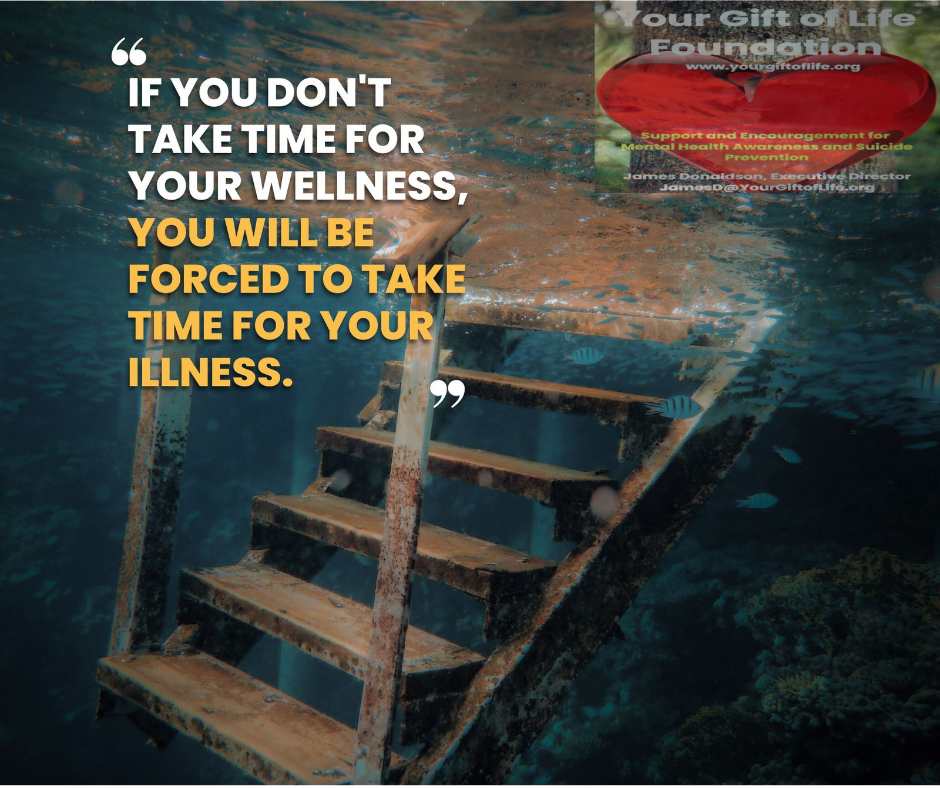
"If you don't take time for your wellness, you will be forced to take time for your illness."
This quote has been attributed to various sources over the years, but its truth belongs to no single person -- it belongs to every human being who has ever pushed past their limits, ignored the warning signs, and then found themselves stopped cold by a body or mind that simply refused to keep going. It is a warning and an invitation at the same time. A warning about what happens when we treat our own wellbeing as optional. And an invitation to make a different choice -- before the choice is made for us.
The message is stark and simple: you will take time for your health one way or another. The only question is whether you take it on your own terms, proactively, in small sustainable doses -- or whether you take it reactively, in large unavoidable chunks, when illness, burnout, or breakdown finally forces you to stop.
The Culture of Pushing Through
We live in a culture that celebrates pushing through. Working through the pain. Sleeping when you're dead. Grinding harder than everyone else. The hustle is glorified. Rest is suspect. Taking care of yourself is framed as self-indulgence -- something you earn after you have done enough, achieved enough, produced enough.
And so we push. We skip the workout because the deadline is more urgent. We skip the sleep because there is more to do. We skip the doctor's appointment because we don't have time. We eat whatever is fastest, drink more coffee than water, and tell ourselves we will take better care of ourselves when things slow down.
Things rarely slow down.
And the body keeps score. Every skipped meal, every sleepless night, every stress response that never fully resolves, every warning sign that gets ignored -- it all accumulates. Not always visibly, not always immediately, but steadily. The body is remarkably resilient, and it will compensate for a long time. But it has limits. And when those limits are reached, it stops compensating and starts breaking down.
The breakdown takes many forms. It might be a physical illness -- the immune system, depleted by chronic stress and poor self-care, finally failing to hold back what it has been holding back. It might be a mental health crisis -- anxiety or depression that has been building for years finally becoming impossible to manage. It might be burnout -- the complete exhaustion of physical, emotional, and mental resources that leaves a person unable to function at even a basic level. It might be a heart attack, a panic attack, an autoimmune flare, a breakdown in a relationship that has been neglected for too long.
Whatever form it takes, the message is the same: you did not take time for your wellness, so your body and mind are taking time for your illness. And this time, you do not get to choose how much time it takes.
What Wellness Actually Means
When people hear the word wellness, they often think of something elaborate -- a perfect morning routine, an expensive gym membership, a complicated diet, a meditation practice that requires an hour of uninterrupted silence. And because that version of wellness feels unattainable, they conclude that wellness itself is unattainable, and they give up before they start.
But wellness, at its most fundamental, is much simpler than that. It is the basic maintenance of the human system -- the physical, mental, and emotional infrastructure that everything else in your life runs on.
Physical wellness is not about being an athlete. It is about moving your body regularly, sleeping enough, eating in a way that gives you energy rather than depleting it, drinking enough water, and going to the doctor when something needs attention. These are not luxuries. They are the minimum requirements for a functioning human being.
Mental wellness is not about being happy all the time or having no problems. It is about having enough mental space to think clearly, make good decisions, and engage with your life. It is about managing stress before it becomes overwhelming, processing difficult emotions rather than suppressing them, and maintaining some sense of meaning and purpose in what you do.
Emotional wellness is not about being positive or upbeat. It is about having relationships that nourish you, being able to ask for help when you need it, setting boundaries that protect your energy, and allowing yourself to feel what you feel without being consumed by it.
None of this requires perfection. None of it requires a complete life overhaul. It requires consistent, small acts of care -- the kind that are easy to skip on any given day, but that compound over time into either a foundation of health or a deficit of it.
The Math of Wellness
Here is the practical reality: taking time for your wellness costs relatively little. A thirty-minute walk. Seven to eight hours of sleep. A meal that actually nourishes you. Ten minutes of quiet. A conversation with someone who matters to you. These are not enormous investments. They are small, regular deposits into the account of your health.
Taking time for your illness costs enormously. Days or weeks away from work. Medical appointments, procedures, treatments. The financial cost of healthcare. The relational cost of being unavailable to the people who depend on you. The emotional cost of fear, uncertainty, and the loss of the life you were living. The opportunity cost of everything you cannot do while you are recovering.
The math is not complicated. Prevention is almost always cheaper -- in time, money, energy, and suffering -- than treatment. The thirty minutes you invest in your wellness today may save you thirty days of recovery later. The boundaries you set now may prevent the breakdown that would cost you everything.
And yet we consistently choose the expensive option. Not because we are foolish, but because the cost of neglect is deferred while the cost of care is immediate. The walk takes time now. The illness comes later. And the human brain is not naturally good at trading present inconvenience for future benefit.
This is why the quote matters. It is a reminder to do the math -- to look ahead at what the deferred cost actually is, and to make the investment now while you still have the choice.
Making the Time
The most common objection to taking time for wellness is that there is no time. The schedule is full. The demands are real. The responsibilities are not going away. And this is often genuinely true -- many people are living under real constraints, with real obligations, and genuinely limited hours in the day.
But here is what is also true: you are already spending time on your health. The question is only whether you are spending it proactively or reactively. Every hour of sleep you sacrifice is an hour you will eventually pay back -- with interest -- in reduced cognitive function, weakened immunity, and increased risk of chronic disease. Every meal you skip or replace with something that depletes rather than nourishes is a withdrawal from a finite account. Every stress response that goes unprocessed is a small deposit of cortisol and inflammation that accumulates over time.
You are not choosing between taking time for wellness and not taking time for wellness. You are choosing between taking time for wellness now, on your terms, in manageable amounts -- or taking time for illness later, on its terms, in amounts you do not get to control.
Given that choice, the question becomes: where can I find the time? Not the perfect amount of time. Not the time for a complete wellness transformation. Just a little more time than I am currently giving to my own care.
Maybe it is going to bed thirty minutes earlier. Maybe it is taking a real lunch break instead of eating at your desk. Maybe it is scheduling the doctor's appointment you have been putting off for six months. Maybe it is saying no to one commitment that is draining you so you have a little more capacity for the things that matter. Maybe it is asking for help with something you have been carrying alone.
Start small. Start somewhere. The investment compounds.
A Message for Those Who Are Already Ill
It is important to say clearly: this quote is not a judgment of people who are sick. Illness is not always the result of neglecting wellness. Genetics, environment, circumstances beyond our control -- these are real factors. Some people do everything right and still get sick. Some people face health challenges that no amount of self-care could have prevented.
If you are already dealing with illness -- physical or mental -- this message is not for you to look back with regret. It is for you to look forward with intention. Whatever your current health situation, there is almost always something within your control. Some small act of care that is available to you, in the circumstances you are actually in, that moves you toward greater wellbeing rather than away from it.
The goal is not perfection. The goal is direction. Are you moving, however slowly, toward greater care for yourself? That is enough. That is the practice.
The Foundation of Everything
Your health -- physical, mental, emotional -- is not one item on a long list of priorities. It is the foundation that all the other priorities rest on. Your work, your relationships, your creativity, your capacity to show up for the people you love, your ability to pursue the things that matter to you -- all of it depends on the foundation of your wellbeing.
When the foundation cracks, everything built on it becomes unstable. When the foundation holds, everything built on it has a chance to flourish.
Take time for your wellness. Not because you have earned it. Not because everything else is done. Not because the schedule has finally opened up. Take time for it because it is the foundation. Because without it, nothing else works the way it should. Because you are worth the investment. And because the alternative -- being forced to take time for your illness -- costs far more than you want to pay.
You can make it if you try. And taking care of yourself is one of the most important things you can try.
What is one small act of wellness you could invest in today -- before your body asks you to stop and pay attention?
Explore Topics
Written by
James Donaldson
Content creator and writer sharing insights and stories.