UCanMakeItIfYouTry - It Is Not Enough to Be Busy; So Are the Ants. The Question Is: What Are We Busy About?
Henry David Thoreau -- philosopher, naturalist, and one of the most penetrating observers of American life -- cuts through the noise of modern busyness with a single, devastating question: what are we busy about? Not whether we are busy. Of course we are busy. The ants are busy too. The question is whether our busyness is pointed at anything that actually matters.
It Is Not Enough to Be Busy; So Are the Ants. The Question Is: What Are We Busy About?
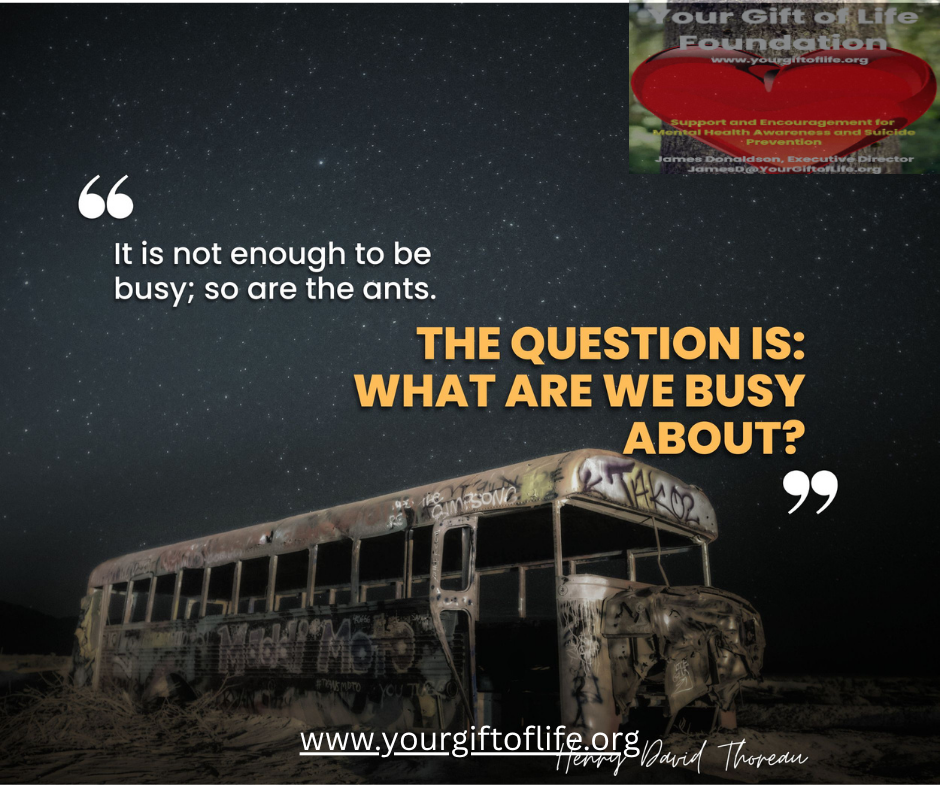
"It is not enough to be busy; so are the ants. The question is: what are we busy about?" -- Henry David Thoreau
Henry David Thoreau wrote this in a letter in 1857, but it reads like it was written this morning. Thoreau spent two years living deliberately at Walden Pond, stripping his life down to its essentials, watching what happened when he removed the noise and the busyness and the social performance of productivity. What he found was that most of what people called living was not living at all -- it was motion without direction, effort without purpose, busyness for its own sake.
He watched the ants too. They are extraordinarily busy. They never stop. They carry loads many times their own weight, they build elaborate structures, they coordinate with thousands of their kind in a seamless choreography of ceaseless activity. And none of it is chosen. None of it is examined. None of it is aimed at anything the ant has decided matters. It is simply what ants do.
Thoreau's question is whether we are doing any better.
The Busyness Trap
We live in a culture that has elevated busyness to a virtue. To be busy is to be important, to be in demand, to be serious about your life. To not be busy is to be lazy, unambitious, or somehow falling behind. We wear our packed schedules and our exhaustion as proof that we are doing something with our lives.
But Thoreau's question cuts right through this. Busyness, by itself, proves nothing. It does not prove that you are living well. It does not prove that your efforts are aimed at what matters most to you. It does not prove that the life you are building through all this activity is the life you actually want. It only proves that you are in motion -- and the ants are in motion too.
The trap is that busyness feels productive. When we are busy, we feel like we are making progress, like we are doing our part, like we are justified in our existence. The feeling of busyness is so similar to the feeling of purposeful effort that it is easy to confuse the two. We mistake motion for direction. We mistake activity for meaning. We mistake a full calendar for a full life.
And so we stay busy -- filling every hour, responding to every demand, saying yes to everything that asks for our time -- without ever stopping to ask the question Thoreau is asking: what is all of this actually for? What are we building? What are we moving toward? What, in the end, are we busy about?
The Examined Life vs. the Ant Colony
Socrates famously said that the unexamined life is not worth living. Thoreau is making the same point from a different angle. The unexamined busyness is not worth sustaining. Not because busyness is bad -- purposeful effort is one of the great sources of human satisfaction -- but because busyness without examination is just the ant colony. It is activity that perpetuates itself without ever asking whether it is pointed at anything worth pointing at.
The examined life requires pausing. It requires stepping back from the motion long enough to look at where the motion is taking you. It requires asking the uncomfortable questions: Is this how I want to spend my days? Are the things I am busiest about the things I care most about? If I continue on this trajectory, what will I have built? What will I have missed? What will I wish I had done differently?
These questions are uncomfortable precisely because they might reveal a gap between how we are spending our time and what we actually value. Most of us, if we are honest, would find that gap. We would find that we are spending enormous amounts of time and energy on things that are urgent but not important, on things that other people want from us rather than things we have chosen, on things that feel productive but are not actually moving us toward anything we have deliberately decided to pursue.
Finding that gap is not a reason for despair. It is an invitation. It is the beginning of the examined life -- the life that is actually chosen rather than simply accumulated.
What Are You Busy About?
This is the question worth sitting with today. Not in a spirit of self-criticism, but in a spirit of genuine curiosity. What are you actually busy about?
Not what you say you are busy about. Not what you tell people when they ask how you are doing. But what, when you look honestly at where your time and energy actually go -- what are you building? What are you serving? What is the shape of the life that your busyness is creating?
For many people, the honest answer is: I am busy about other people's priorities. The demands of the job, the expectations of the family, the requests of friends and colleagues and acquaintances -- these fill the days, and the things that feel most personally meaningful get pushed to the margins, always almost but never quite getting the time and attention they deserve.
For others, the honest answer is: I am busy about avoiding something. Busyness is one of the most effective ways to avoid the things we are afraid to face -- the relationship that needs a hard conversation, the dream that might not work out, the grief that has not been fully felt, the question of what we actually want that we are not sure we can answer. A full schedule is a very effective shield against the inner life.
For still others, the honest answer is: I am busy about proving something. Proving that I am enough, that I am valuable, that I deserve my place. The busyness is not really about the tasks -- it is about the feeling of worth that comes from being needed, from being productive, from being able to point to all this activity as evidence that I matter.
None of these are shameful. They are human. But they are worth seeing clearly, because you cannot redirect your life toward what matters most until you understand what your busyness is actually serving.
Purposeful Effort: The Alternative to Ant-Busyness
Thoreau is not arguing for idleness. He was one of the most productive writers and thinkers of his era. He walked miles every day, observed the natural world with extraordinary attention, wrote voluminously, and engaged deeply with the political and social questions of his time. He was not lazy. He was deliberate.
The alternative to ant-busyness is not doing less. It is doing what you have chosen -- what you have examined and decided matters -- with full attention and genuine commitment. It is the difference between a life that happens to you and a life that you are actively building.
Purposeful effort has a different quality than mere busyness. It is more satisfying, even when it is harder. It is more energizing, even when it is more demanding. It produces a different kind of tiredness at the end of the day -- the tiredness of someone who has spent themselves on something that mattered, rather than the depletion of someone who has been busy all day without quite knowing why.
Building a life of purposeful effort requires three things.
First, clarity about what matters most to you. Not what should matter, not what other people think should matter, but what actually matters to you -- what you care about deeply, what you want to have built when you look back, what kind of person you want to have become. This clarity does not arrive automatically. It requires the kind of deliberate reflection that Thoreau practiced at Walden -- the willingness to sit with the question long enough to get past the surface answers to the true ones.
Second, the discipline to protect time for what matters most. Clarity without action is just philosophy. The things that matter most to you will not automatically get your best time and energy -- the urgent and the demanding will crowd them out unless you actively protect them. This means saying no to some things that are fine in order to say yes to the things that are essential. It means treating your most important priorities with the same seriousness you give to your most pressing obligations.
Third, the courage to keep asking the question. What are we busy about? is not a question you answer once and then move on. It is a question for every season of life, because what matters most changes as you change, as your circumstances change, as you learn more about yourself and the world. The examined life is not a destination -- it is a practice. The practice of regularly stepping back from the motion to ask whether the motion is pointed at something worth pointing at.
A Monday Invitation
It is Monday -- the beginning of a new week, a natural moment for this kind of reflection. Before the week fills up, before the demands accumulate and the calendar locks in, take a few minutes with Thoreau's question.
What are you busy about this week? Not what is on your calendar -- but what is the week actually for? What would make this week feel genuinely well-spent when you look back at it on Friday? What is one thing that matters most to you that deserves more of your time and attention than it usually gets?
You do not have to overhaul your life. You do not have to quit your job and move to a pond. You just have to ask the question -- honestly, curiously, without judgment -- and let the answer point you toward one small adjustment in the direction of a more deliberately lived week.
The ants are busy. They will always be busy. The question is whether you are busy about something more.
You can make it if you try. And asking what you are truly busy about -- and having the courage to let the answer guide you -- is one of the most important ways to try.
What are you busy about this week? If you looked at where your time and energy actually go, would they reflect what matters most to you? What is one adjustment you could make this week to close that gap?
Explore Topics
Written by
James Donaldson
Content creator and writer sharing insights and stories.