UCanMakeItIfYouTry - Happiness Is Not a Matter of Intensity but of Balance, Order, Rhythm, and Harmony
Thomas Merton -- Trappist monk, poet, and one of the most searching spiritual writers of the twentieth century -- offers a definition of happiness that cuts against almost everything our culture tells us. Happiness is not found in more. Not in bigger, louder, faster, or more intense. It is found in balance, order, rhythm, and harmony. Four quiet words that point toward a way of living most of us have never been taught.
Happiness Is Not a Matter of Intensity but of Balance, Order, Rhythm, and Harmony
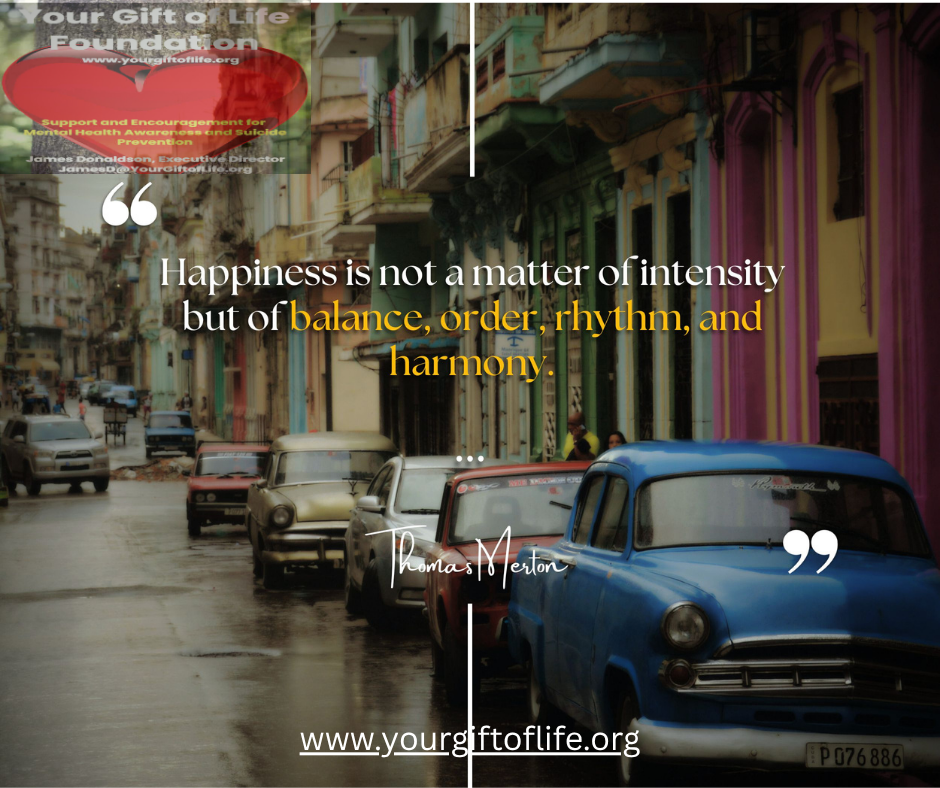
"Happiness is not a matter of intensity but of balance, order, rhythm, and harmony." -- Thomas Merton
Thomas Merton entered the Abbey of Gethsemani in Kentucky in 1941, at the age of twenty-six, and spent the rest of his life as a Trappist monk. He wrote more than sixty books -- on contemplation, social justice, interfaith dialogue, and the nature of the human soul -- and became one of the most widely read spiritual authors of the modern era. His autobiography, The Seven Storey Mountain, sold millions of copies and introduced a generation of readers to the possibility of a contemplative life.
He lived simply. He prayed, worked, wrote, and listened. And from that life of deliberate simplicity, he arrived at this: happiness is not a matter of intensity but of balance, order, rhythm, and harmony.
It is worth sitting with that for a moment. Because it is almost the exact opposite of what we are told.
The Intensity Trap
We live in a culture that equates intensity with meaning. The more intense the experience, the more alive we feel -- or so the story goes. The bigger the thrill, the louder the music, the more extreme the adventure, the more stimulating the entertainment, the more we are consuming and achieving and experiencing -- the better. Intensity is the currency of modern happiness.
And so we chase it. We fill our schedules to capacity because empty time feels like wasted time. We seek out the next peak experience because the last one has already faded. We scroll endlessly because there might be something more interesting just below the current post. We push harder at work because more achievement should mean more satisfaction. We turn up the volume on every dimension of life because louder feels like more alive.
But here is what most of us have noticed, even if we have not said it out loud: the intensity does not deliver what it promises. The peak experience fades. The achievement satisfies briefly and then the bar moves. The stimulation leaves us more restless, not less. The fullness of the schedule leaves us exhausted rather than fulfilled. We get more and more of what we thought we wanted, and we feel, if anything, further from the happiness we were chasing.
This is not a personal failure. It is a predictable consequence of chasing the wrong thing. Intensity is not the path to happiness. Merton knew this. And he points us toward something else entirely.
Balance: The Foundation
The first word Merton offers is balance. Not the Instagram version of balance -- the perfectly curated life with equal portions of work and play and wellness and relationships, all arranged aesthetically. Real balance. The kind that is less about equal distribution and more about right proportion.
Balance is the recognition that you are a whole person -- not just a worker, not just a parent, not just a body, not just a mind -- and that all the dimensions of your life require some degree of attention and care. When one dimension is chronically neglected, the whole system suffers. The person who gives everything to work and nothing to relationships discovers that professional success does not fill the relational void. The person who gives everything to others and nothing to themselves discovers that the well runs dry. The person who tends only to the body and ignores the inner life discovers that physical health alone does not produce peace.
Balance is not about doing everything equally. It is about not letting any essential dimension of your life go completely unattended. It is about noticing when something important is being starved and making the adjustments -- not perfectly, not all at once, but consistently, over time.
This kind of balance is not dramatic. It does not make for a compelling highlight reel. But it produces something that intensity rarely does: a life that is sustainable, that holds together, that does not periodically collapse under the weight of its own imbalances.
Order: The Structure That Frees
The second word is order. This one tends to make people nervous -- order sounds like rigidity, like constraint, like the opposite of freedom and spontaneity. But Merton means something different. He means the kind of order that creates the conditions for a good life to unfold.
Think of a garden. A garden requires order -- the beds need to be arranged, the plants need space, the weeds need to be managed, the watering needs to happen on some kind of schedule. Without that order, the garden does not become wild and free. It becomes chaotic and unproductive. The plants compete and crowd each other out. The weeds take over. The beauty that was possible in the space never materializes.
Order is what makes the garden possible. And the same is true of a life.
Order means having some structure to your days -- not a rigid, joyless schedule, but enough intentional arrangement that the things that matter actually happen. It means knowing what your priorities are and organizing your time and energy around them, rather than letting the loudest and most urgent demands crowd out the most important ones. It means having rhythms and routines that support your wellbeing rather than undermining it.
Order is not the enemy of spontaneity. It is the foundation that makes genuine spontaneity possible. When the essential things are taken care of -- when you have slept, when you have done the work that needed doing, when the relationships that matter have been tended -- there is real freedom in the spaces between. The spontaneous moment is a gift when it arises in a life that has order. In a life without order, it is just another source of chaos.
Rhythm: The Wisdom of Cycles
The third word is rhythm. This is perhaps the most overlooked of the four, and possibly the most important.
Rhythm is the recognition that life moves in cycles -- that there are natural patterns of effort and rest, engagement and withdrawal, activity and stillness -- and that happiness requires honoring those cycles rather than fighting them.
Every living system operates in rhythm. The heart beats in rhythm. The breath moves in rhythm. The seasons cycle in rhythm. Sleep and waking alternate in rhythm. Even the most productive creative work happens in rhythm -- periods of intense focus followed by periods of rest and integration, not a single unbroken push toward output.
But modern life is largely organized against rhythm. We expect ourselves to be equally productive at all hours of the day. We resist the natural pull toward rest because rest feels unproductive. We push through the seasons of our lives that call for slowness and withdrawal because we are afraid of what it means to stop. We treat the need for rhythm as a weakness rather than a wisdom.
The result is a kind of chronic dysrhythmia -- a life that is always on, always pushing, always producing, with no genuine rest and no genuine recovery. And a life without rhythm is a life that wears itself out. The energy depletes. The creativity dries up. The joy becomes harder and harder to access.
Honoring rhythm means building genuine rest into your life -- not just sleep, but real restoration. It means allowing yourself to move more slowly in the seasons that call for slowness. It means recognizing that the fallow period is not wasted time -- it is the time when the soil is recovering its fertility for the next season of growth. It means trusting the cycle rather than trying to override it.
Harmony: The Integration of the Whole
The fourth word is harmony. And harmony is what emerges when balance, order, and rhythm are present together -- when the different dimensions of your life are not fighting each other but working together, each supporting the others, the whole greater than the sum of its parts.
Harmony is not the absence of tension. In music, harmony includes dissonance -- notes that create tension before resolving into consonance. The tension is part of what makes the harmony rich and interesting. A life without any tension is not harmonious -- it is flat.
What harmony means is that the tensions in your life are productive rather than destructive. That the different demands and commitments and dimensions of who you are are in some kind of working relationship with each other, rather than at war. That your work and your relationships and your inner life and your physical wellbeing are not competing for the last scraps of your energy, but are each receiving enough to sustain them -- and each contributing something to the whole.
Harmony is what it feels like when a life is working. Not perfectly -- never perfectly -- but genuinely. When you end a day tired but not depleted. When you look at your life and recognize it as yours, as an expression of what you actually value, as something you are genuinely living rather than just surviving.
Building a Life of Balance, Order, Rhythm, and Harmony
None of this happens automatically. It requires intention -- the willingness to look honestly at how you are living and to make adjustments in the direction of what actually produces wellbeing rather than what merely produces intensity.
Start with one question: which of these four -- balance, order, rhythm, harmony -- is most absent from your life right now? Not all four at once. Just the one that is most missing. And then ask: what is one small thing I could do this week to move toward it?
Maybe it is protecting one evening for something that restores you. Maybe it is establishing a morning routine that gives your day some order before the demands begin. Maybe it is building in a genuine rest day -- not a day of catching up, but a day of actual rest. Maybe it is having an honest conversation about a relationship that has been out of balance for too long.
Small adjustments, made consistently, compound into a different kind of life. Not a more intense life. A more harmonious one. And according to Thomas Merton -- and the evidence of most people who have lived long and well -- that is where happiness actually lives.
You can make it if you try. And building a life of balance, order, rhythm, and harmony is one of the most worthwhile things you can try.
Of the four -- balance, order, rhythm, and harmony -- which one is most missing from your life right now? What would one small step toward it look like this week?
Explore Topics
Written by
James Donaldson
Content creator and writer sharing insights and stories.