UCanMakeItIfYouTry - Almost Everything Will Work Again if You Unplug It for a Few Minutes, Including You
Anne Lamott -- novelist, essayist, and one of the most honest and funny voices writing about the human condition -- offers a deceptively simple piece of wisdom that lands differently the longer you sit with it: almost everything will work again if you unplug it for a few minutes, including you. It sounds like a tech support joke. It is actually a profound truth about how human beings are designed to function.
Almost Everything Will Work Again if You Unplug It for a Few Minutes, Including You
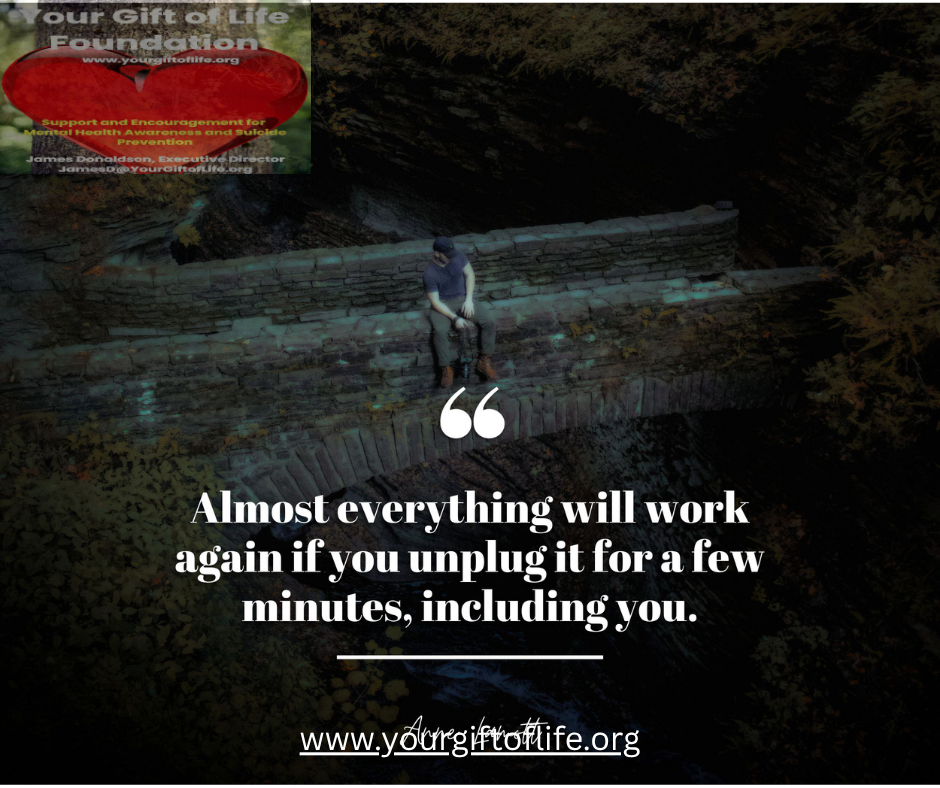
"Almost everything will work again if you unplug it for a few minutes, including you." -- Anne Lamott
Anne Lamott has spent decades writing with radical honesty about faith, recovery, motherhood, grief, and the beautiful mess of being human. Her books -- Bird by Bird, Traveling Mercies, Help Thanks Wow -- have found their way into the hands of millions of readers who recognize themselves in her unflinching, often hilarious, always compassionate accounts of what it actually feels like to be alive. She does not write from a place of having figured it all out. She writes from the middle of it, which is exactly why she is so trustworthy.
This quote has the rhythm of a joke -- the setup, the pause, the unexpected turn. Almost everything will work again if you unplug it for a few minutes. Yes, yes, the router, the laptop, the phone. And then: including you. The laugh that follows is the laugh of recognition. Because of course. Of course that is true. And of course we never do it.
The Wisdom Hidden in the Tech Support Metaphor
When a device stops working -- when it freezes, when it slows to a crawl, when it starts behaving erratically -- the first thing any tech support person will tell you is to turn it off and turn it back on. Not because they do not know what they are doing. Because they do. The restart clears the accumulated processes, releases the memory that has been tied up, allows the system to return to a clean baseline. It is not a workaround. It is the actual solution, and it works with remarkable frequency.
The reason it works is that complex systems -- whether digital or biological -- accumulate load over time. Background processes multiply. Errors compound. Resources that were allocated for one task do not get fully released when that task ends. The system keeps running, but it runs with increasing friction, increasing inefficiency, increasing instability. It does not crash all at once. It just gets slower, glitchier, less responsive, less capable of doing what it was designed to do.
Sound familiar?
This is precisely what happens to human beings under sustained stress and without adequate rest. The nervous system accumulates activation. The mind fills with unprocessed thoughts and unresolved tensions. The emotional system carries the weight of interactions and experiences that have not been fully digested. The body holds the physical residue of stress in muscles, in posture, in the shallow breathing that becomes habitual when we are always on.
We keep running. But we run with increasing friction. We become slower to respond and quicker to react. We become less creative, less patient, less capable of the clear thinking and genuine presence that our best work and our best relationships require. We do not crash all at once -- usually. We just gradually become a less functional version of ourselves, and we adapt to that diminished state so gradually that we stop noticing how far we have drifted from our baseline.
The solution, Lamott is telling us, is the same as it is for the device. Unplug. Restart. Return to baseline.
What Unplugging Actually Means
For a device, unplugging is literal and complete. The power goes off. Everything stops. The restart is total.
For a human being, unplugging is more nuanced -- but the principle is the same. It means creating a genuine interruption in the continuous stream of demands, stimulation, and effortful engagement that characterizes most of our waking hours. It means stepping out of the current long enough for the system to clear, to release, to reset.
What this looks like varies from person to person and moment to moment. For some people, unplugging means sleep -- genuine, sufficient, uninterrupted sleep that allows the brain to do its essential maintenance work. For others it means a walk without a destination and without earbuds, just moving through the world with no agenda. For others it means sitting quietly -- in prayer, in meditation, in simple stillness -- without trying to accomplish anything or get anywhere.
It might mean a day away from screens. A weekend in nature. A conversation with a friend that has nothing to do with work or obligations. A meal eaten slowly, without multitasking. A morning that begins without immediately reaching for the phone.
The common thread in all of these is the interruption of the continuous. The pause. The space between one thing and the next that allows the system to release what it has been holding and return to something closer to its natural state.
This is not laziness. This is not avoidance. This is maintenance -- the essential, non-negotiable maintenance that every complex system requires to continue functioning well.
Why We Resist the Unplug
If unplugging is so simple and so effective, why do so few of us do it consistently? Why do we push through exhaustion, skip the rest, fill every gap with stimulation, and treat the need for genuine downtime as a weakness or a luxury?
Part of the answer is cultural. We live in a world that rewards continuous output and treats rest as something you earn rather than something you need. The person who is always available, always responsive, always producing is celebrated. The person who takes genuine breaks, protects their rest, and refuses to be perpetually on call is seen as less committed, less serious, less driven.
Part of the answer is psychological. Many of us are uncomfortable with stillness. When we stop moving, when we stop doing, when we unplug from the stream of activity and stimulation, we come face to face with whatever we have been too busy to feel -- the anxiety, the grief, the uncertainty, the questions we have been outrunning. Staying busy is one of the most effective ways to avoid the inner life, and many of us have been doing it for so long that we have forgotten there is an inner life to return to.
Part of the answer is simply habit. We have trained ourselves to be always on, and the nervous system has adapted to that state as its new normal. The discomfort of stopping -- the restlessness, the guilt, the sense that we should be doing something -- is the withdrawal symptom of a system that has forgotten how to rest.
But the resistance, however understandable, does not change the underlying reality. The system needs to be unplugged. The longer we go without it, the more we need it, and the more dramatic the eventual crash tends to be when the system finally gives out.
The Reset Is Not a Reward -- It Is a Requirement
One of the most important reframes in Lamott's quote is the implicit one: the unplug is not a treat you give yourself after you have done enough. It is a functional requirement for continued operation.
We do not tell our devices: you can restart after you have processed enough requests. We restart them when they need restarting, because we understand that a device running on a corrupted state is not actually serving us -- it is just consuming power while producing degraded output.
The same is true of us. A person running on exhaustion, accumulated stress, and insufficient rest is not actually performing at their best -- they are consuming enormous amounts of energy while producing a fraction of what they are capable of. The reset is not a reward for good performance. It is the condition that makes good performance possible.
This means that unplugging is not something you do when you have earned it. It is something you do because you need it -- because the system requires it, because the people who depend on you deserve the rested, reset version of you rather than the depleted, overloaded one, and because you deserve it too.
A Veterans Day Reflection
Today is Veterans Day -- a day to honor the men and women who have served, many of whom carry burdens that most of us will never fully understand. The weight of service, of sacrifice, of what has been witnessed and endured, is real and lasting. And one of the things we know about those who carry that weight is that the need to unplug -- to find genuine rest, genuine peace, genuine restoration -- is not a sign of weakness. It is a sign of wisdom. It is the recognition that even the strongest systems need maintenance, and that caring for yourself is not separate from being strong. It is part of it.
For all of us -- veterans and civilians alike -- the invitation today is the same. Find a few minutes to unplug. Not because you have earned it. Because you need it. Because almost everything works better after a reset, and you are no exception.
You can make it if you try. And giving yourself permission to unplug -- genuinely, completely, without guilt -- is one of the most important ways to try.
When did you last truly unplug -- not just rest, but fully disconnect from the demands and stimulation of your daily life? What would it look like to build a genuine reset into your week, starting now?
Explore Topics
Written by
James Donaldson
Content creator and writer sharing insights and stories.