UCanMakeItIfYouTry - Smile, Breathe, and Go Slowly
Thich Nhat Hanh distills an entire philosophy of living into five words. In a world that glorifies speed and busyness, this gentle instruction is quietly revolutionary -- and profoundly healing.
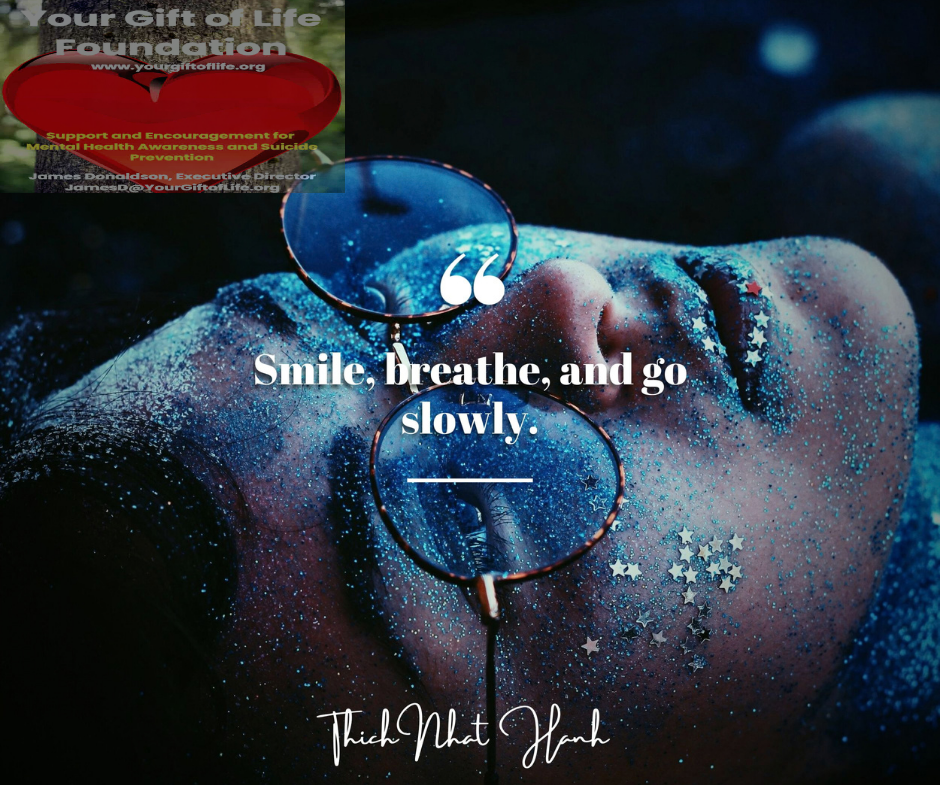
Smile, Breathe, and Go Slowly
-- Thich Nhat Hanh
Five words. No complicated framework. No lengthy prescription.
Just this: Smile, breathe, and go slowly.
Thich Nhat Hanh, the Vietnamese Zen master, poet, and peace activist who spent decades teaching mindfulness to the world, had a gift for distilling profound wisdom into the simplest possible language. And this quote may be his most quietly revolutionary.
Because in five words, he is offering a complete alternative to the way most of us move through our days.
The World We Live In
We live in a culture that has declared war on slowness.
Speed is celebrated. Busyness is worn as a badge of honor. The person who is always rushing, always multitasking, always optimizing -- that person is seen as serious, productive, important. The person who moves slowly, who pauses, who takes time to breathe -- that person is seen as falling behind.
We have internalized this so deeply that many of us feel guilty when we slow down. Rest feels like laziness. Stillness feels like wasted time. A quiet moment feels like something we have not yet earned.
And so we rush. We push. We grind. We fill every silence with noise and every pause with productivity. We eat while working, walk while scrolling, rest while worrying about everything we should be doing instead.
And we wonder why we are exhausted. Why we feel disconnected. Why life seems to be passing by in a blur we cannot quite catch.
Thich Nhat Hanh's answer is not complicated: we are moving too fast to actually live.
Smile
The instruction to smile is not about performing happiness or pretending everything is fine. In the Buddhist tradition Thich Nhat Hanh taught from, the half-smile is a practice -- a gentle, conscious softening of the face that signals to the body and mind that this moment is safe, that you are present, that you are here.
The science supports this ancient wisdom. The physical act of smiling -- even a small, quiet smile -- activates neural pathways associated with positive emotion. It is not that you smile because you feel good. It is that smiling, even gently, helps you feel good. The body and mind are in constant conversation, and the face is one of the most powerful messengers.
A smile also changes how you meet the world. It softens the edges of difficulty. It creates a small but real space between you and whatever is pressing on you. It is a tiny act of grace toward yourself and everyone around you.
Start there. Just that.
Breathe
The breath is the one function of the body that is both automatic and conscious -- the bridge between what happens to us and how we respond.
When we are anxious, our breathing becomes shallow and rapid, signaling danger to the nervous system and amplifying the very stress we are trying to manage. When we breathe slowly and deeply, we send the opposite signal: I am safe. I can handle this. I am here.
Thich Nhat Hanh taught breath awareness as the foundation of all mindfulness practice. Not because breathing is complicated, but because it is always available. No matter where you are, no matter what is happening, you can return to the breath. You can take one conscious, deliberate breath and step out of the spiral of reactivity and back into the present moment.
One breath. That is the whole practice, repeated as many times as needed.
Breathe. Just breathe.
Go Slowly
This is perhaps the most countercultural instruction of the three.
Go slowly. Not because you are giving up, not because you do not care, not because the work does not matter -- but because speed, beyond a certain point, is not efficiency. It is escape.
When we rush, we are rarely rushing toward something. We are rushing away from the discomfort of being fully present. Away from the quiet that might ask us to feel something. Away from the moment itself, which is the only place life actually happens.
Going slowly is an act of courage. It means being willing to actually be where you are. To eat the meal and taste it. To have the conversation and hear it. To walk the path and see it. To do the work and mean it.
Slowness is not the enemy of productivity. Frantic speed is. The work done with full presence, done slowly enough to be done well, is almost always better than the work done in a blur of anxious rushing.
And beyond productivity -- beyond output and efficiency and getting things done -- going slowly is how you actually experience your life rather than simply surviving it.
Five Words, a Whole Life
Smile. Breathe. Go slowly.
You do not have to do all three perfectly. You do not have to transform overnight. You do not have to become a monk or a meditator or someone who has figured it all out.
You just have to remember, in the middle of the rush, that you have a choice. That you can pause. That you can soften. That you can breathe. That the moment you are in right now is the only one you actually have, and it deserves your full, unhurried presence.
That is the whole teaching. Five words, a whole life.
You Can Make It
Whatever pace you have been keeping lately -- whatever pressure has been driving you forward faster than feels right -- this is your permission to slow down.
Not forever. Not all at once. Just right now, in this moment.
Smile. Breathe. Go slowly.
You will get there. And you will actually remember the journey.
Your Gift of Life Foundation is dedicated to mental health awareness and helping people find peace in the present moment. Visit us at www.yourgiftoflife.org.
Explore Topics
Written by
James Donaldson
Content creator and writer sharing insights and stories.