UCanMakeItIfYouTry - Calm Mind Brings Inner Strength and Self-Confidence, So That's Very Important for Good Health
The Dalai Lama connects calm mind directly to inner strength, self-confidence, and good health. In a world that rewards busyness and noise, this ancient wisdom is more urgent than ever.
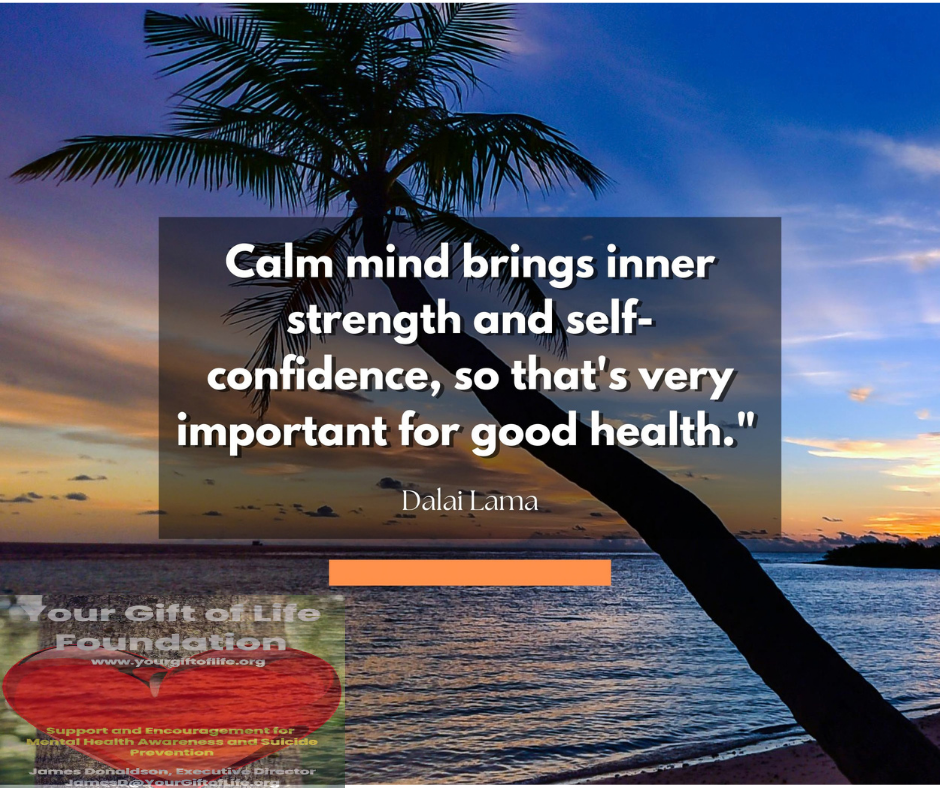
Calm Mind Brings Inner Strength and Self-Confidence, So That's Very Important for Good Health
-- Dalai Lama
In a world that moves faster every year, that rewards busyness, that fills every quiet moment with noise and notification, the Dalai Lama offers a prescription that sounds almost countercultural:
Calm mind brings inner strength and self-confidence, so that's very important for good health.
Simple words. Profound implications.
Because what His Holiness is describing is not just a pleasant state to aspire to. He is drawing a direct line between the quality of your mind and the quality of your health -- inner and outer, mental and physical, emotional and spiritual.
The Calm Mind Is Not an Empty Mind
There is a common misunderstanding about what a calm mind actually is. Many people assume it means a mind with nothing in it -- no thoughts, no concerns, no engagement with the world. A kind of blissful vacancy.
That is not what the Dalai Lama means. And it is not what any serious tradition of contemplative practice has ever meant.
A calm mind is not an absent mind. It is a mind that is present without being reactive. A mind that can hold difficulty without being consumed by it. A mind that can face uncertainty without spiraling into panic. A mind that can feel deeply without being swept away.
Think of the surface of a lake. When the wind is still, the surface is calm -- but the lake is full. The water is there, the life beneath it is there, the depth is there. Calm does not mean empty. It means undisturbed.
That is the kind of mind the Dalai Lama is pointing to. Not a mind that has checked out, but a mind that has settled.
How Calm Builds Strength
It might seem counterintuitive that calm produces strength. We tend to associate strength with intensity -- with urgency, with force, with the kind of driven, grinding energy that pushes through obstacles.
But that kind of energy is expensive. It burns hot and burns out. It is reactive rather than responsive. It mistakes noise for power.
Inner strength -- the kind that sustains you through years of difficulty, that keeps you steady when everything around you is shaking, that allows you to act with clarity when others are paralyzed by fear -- that kind of strength comes from a different source entirely.
It comes from a mind that is not constantly at war with itself.
When your mind is calm, you are not spending your energy managing internal chaos. You are not burning resources on worry, rumination, and reactivity. That freed energy becomes available for something else: clear thinking, deliberate action, genuine connection, creative problem-solving, and the quiet confidence that comes from knowing you can trust your own mind.
Calm is not the absence of strength. Calm is where strength lives.
The Self-Confidence That Calm Produces
Self-confidence is often misunderstood as well. We tend to think of it as a feeling -- a kind of internal cheerleading, a belief that we are great and capable and destined to succeed.
But real self-confidence is quieter than that. It is not the loudest voice in the room. It is the person who does not need to be.
Real self-confidence is the settled sense that you can handle what comes. Not that everything will go perfectly, not that you will never fail or struggle or feel afraid -- but that when those things happen, you will be able to meet them. You will not be destroyed by them. You will find your footing.
That kind of confidence does not come from external validation or a string of successes. It comes from the experience of having a mind you can rely on -- a mind that does not abandon you when things get hard, a mind that stays present and functional even under pressure.
Calm mind builds that trust. Over time, the practice of returning to calm -- again and again, through difficulty after difficulty -- teaches you something essential: I can handle this. I have handled things before. I will handle this too.
Calm and Good Health
The Dalai Lama is not speaking metaphorically when he connects calm mind to good health. The science is clear and growing clearer.
Chronic mental agitation -- persistent stress, anxiety, rumination, and emotional reactivity -- activates the body's stress response systems in ways that, over time, damage nearly every system in the body. Cardiovascular health. Immune function. Sleep quality. Digestive health. Hormonal balance. Cognitive function. Inflammation levels.
The mind and body are not separate systems that occasionally influence each other. They are one integrated system, in constant conversation. What happens in the mind happens in the body. What you do to cultivate mental calm, you do for your physical health as well.
This is not new wisdom. The Dalai Lama is drawing on thousands of years of contemplative tradition that understood this long before modern medicine had the tools to measure it. But now we have those tools, and they confirm what the tradition always knew: a calm mind is not a luxury. It is medicine.
Cultivating Calm
The good news is that calm is not a personality trait you either have or do not have. It is a skill. It is cultivated through practice -- through the consistent, patient, unglamorous work of returning your attention to the present moment, again and again, whenever it wanders into worry or reactivity.
It is built through breath. Through stillness. Through time in nature. Through honest conversation. Through the practice of letting small things be small. Through sleep, movement, and the choice to protect your peace as something worth protecting.
None of it is complicated. All of it takes commitment.
But the return on that investment -- inner strength, self-confidence, and good health -- is about as complete a reward as life offers.
You Can Make It
Whatever noise surrounds you today, whatever demands are pressing, whatever worries are circling -- you have access to something that no circumstance can take from you: the capacity to return to calm.
Not permanently. Not perfectly. But again and again, as many times as it takes.
That practice, sustained over time, builds the strongest foundation there is.
Your Gift of Life Foundation is dedicated to mental health awareness and helping people build the inner resources they need to thrive. Visit us at www.yourgiftoflife.org.
Explore Topics
Written by
James Donaldson
Content creator and writer sharing insights and stories.