UCanMakeItIfYouTry - It's Not Stress That Kills Us, It Is Our Reaction to It
Hans Selye, the father of stress research, gave us one of the most empowering insights in modern science: stress itself is not the enemy. Our reaction to it is. And reactions can be changed.
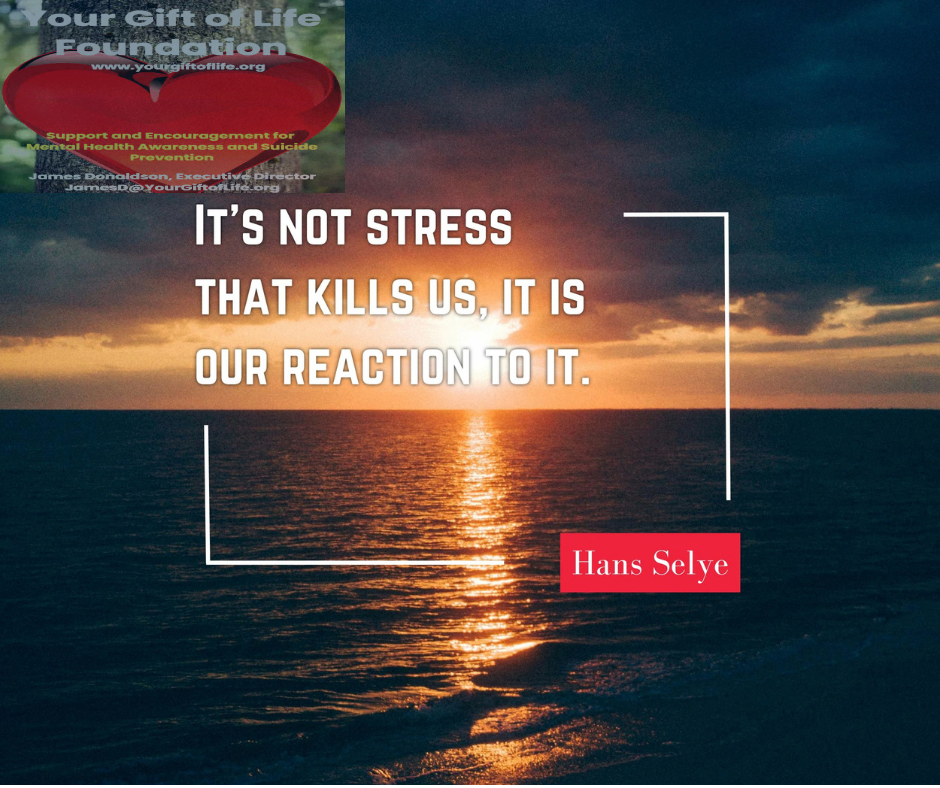
It's Not Stress That Kills Us, It Is Our Reaction to It
-- Hans Selye
Hans Selye spent his career studying stress. He was, in many ways, the scientist who put the word "stress" on the map -- the first researcher to systematically study how the body responds to pressure, threat, and demand. He coined the term as we use it today. He mapped its biology. He spent decades understanding what it does to us.
And after all of that, this is what he concluded:
It's not stress that kills us. It is our reaction to it.
That is not a dismissal of stress. Coming from the man who defined it, it is something far more powerful: it is a redirection of our attention toward the one variable we can actually change.
Stress Is Inevitable. Reaction Is Not.
Let's be honest about something: stress is not going away.
As long as we are alive, we will face demands that exceed our comfort. Deadlines. Difficult relationships. Financial pressure. Health scares. Loss. Uncertainty. The gap between where we are and where we want to be. These are not bugs in the human experience -- they are features of a life that is actually being lived.
Selye himself distinguished between what he called "eustress" -- the positive, motivating kind of stress that sharpens focus and drives performance -- and "distress," the damaging kind that wears us down over time. The difference between the two is not always the event itself. Often, it is how we meet it.
The same pressure that destroys one person propels another. The same loss that breaks one person open becomes the turning point that reshapes another's life. The circumstances are identical. The reactions are not.
What Reaction Actually Means
When Selye points to reaction as the key variable, he is not suggesting we simply "think positive" or pretend stress does not hurt. He is pointing to something deeper and more biological: the way our nervous system interprets and responds to a stressor determines, in large part, what that stressor does to our body and mind.
Chronic stress responses -- the kind where the body stays locked in fight-or-flight long after the immediate threat has passed -- are what drive the real damage. Elevated cortisol. Disrupted sleep. Suppressed immune function. Cardiovascular strain. Inflammation.
But those responses are not automatic. They are shaped by our beliefs about the stressor, our sense of control over the situation, our history with similar challenges, and the coping strategies we have developed over time.
In other words: they are trainable. They are changeable. They are not fixed.
Building a Better Reaction
Changing how we react to stress is not a one-time decision. It is a practice -- built slowly, through consistent choices that rewire how we meet difficulty.
It looks like pausing before responding, creating even a few seconds between stimulus and reaction. It looks like asking "is this actually as threatening as it feels right now?" It looks like building physical resilience through sleep, movement, and nutrition so the body has resources to draw on. It looks like developing a support system so no stressor has to be faced entirely alone.
It looks like the daily, unglamorous work of becoming someone who is not destroyed by hard things -- but shaped by them.
None of this means stress stops hurting. It means the hurt does not have the final word.
You Can Make It
Whatever is pressing on you today -- whatever demands, pressures, or uncertainties are sitting on your chest -- remember what one of the world's foremost stress researchers concluded after a lifetime of study:
The stress is not what determines the outcome. Your reaction is.
And your reaction is something you can work with. Something you can grow. Something that, with time and intention, can become your greatest strength rather than your greatest vulnerability.
Your Gift of Life Foundation supports mental health awareness and stress resilience for everyone. Visit us at www.yourgiftoflife.org.
Explore Topics
Written by
James Donaldson
Content creator and writer sharing insights and stories.