UCanMakeItIfYouTry - You Cannot Find Peace by Avoiding Life
Virginia Woolf -- one of the most brilliant and psychologically perceptive writers of the twentieth century -- left us a quote that cuts straight to the heart of one of the most common mistakes human beings make in the pursuit of peace: You cannot find peace by avoiding life. Seven words. A complete philosophy. And a direct challenge to the strategy most of us have been quietly using for years.
You Cannot Find Peace by Avoiding Life
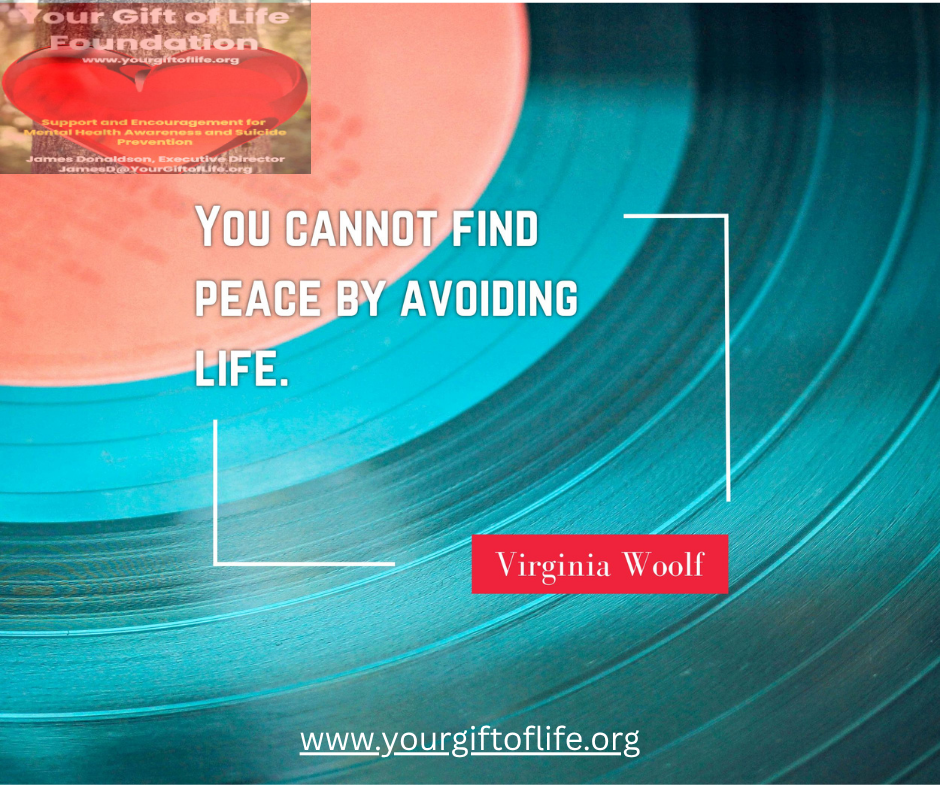
"You cannot find peace by avoiding life." -- Virginia Woolf
Virginia Woolf -- one of the most brilliant and psychologically perceptive writers of the twentieth century -- left us a quote that cuts straight to the heart of one of the most common mistakes human beings make in the pursuit of peace: You cannot find peace by avoiding life.
Seven words. A complete philosophy. And a direct challenge to the strategy most of us have been quietly using for years.
Because avoidance is seductive. It feels like self-protection. It feels like wisdom. When something is painful, frightening, uncertain, or overwhelming, the instinct to step back, to delay, to find a way around rather than through -- that instinct feels entirely reasonable. And in the short term, it works. The discomfort recedes. The anxiety quiets. The thing you were dreading does not happen today.
But Woolf understood something that modern psychology has since confirmed in study after study: avoidance does not produce peace. It produces the illusion of peace, temporarily, at the cost of genuine peace, permanently.
What Avoidance Actually Does
When we avoid something -- a difficult conversation, a frightening medical appointment, a relationship that needs honest attention, a career decision we have been putting off, a grief we have not allowed ourselves to feel -- we do not make the thing go away. We make it larger.
The avoided conversation becomes a growing distance between two people who once felt close. The postponed appointment becomes a source of low-grade dread that colors every ordinary day. The unexamined relationship continues to drain energy and joy in ways we cannot quite name. The unmade decision keeps us suspended in a limbo that prevents us from fully committing to anything. The unfelt grief sits in the body as tension, numbness, or a vague sadness that has no clear object.
Avoidance is not neutral. It is not simply the absence of engagement. It is an active process that requires ongoing energy -- the energy of keeping something at bay, of not thinking about it, of steering around it, of managing the anxiety that arises whenever it comes close to the surface. That energy is enormous. And it is energy that cannot be used for anything else.
The person who is spending significant psychological resources avoiding the things that frighten them has less capacity for joy, for creativity, for genuine connection, for the full experience of being alive. They are not at peace. They are at managed distance from their own life.
The Paradox of Peace
Woolf's insight points to one of the great paradoxes of human experience: the path to peace runs directly through the things we most want to avoid.
Not around them. Not over them. Not under them. Through them.
The difficult conversation, when finally had, almost always produces relief -- not because it went perfectly, but because the weight of not having it is finally gone. The medical appointment, when finally made, replaces the vague dread of the unknown with the concrete reality of what is actually true -- which, in most cases, is far less terrifying than what the imagination had constructed. The grief, when finally allowed to be felt, moves through the body and begins to integrate rather than festering in the dark.
This is not to say that engaging with the hard things is easy. It is not. It requires courage, and it often involves genuine pain. But the pain of engagement is clean pain -- it has a beginning, a middle, and an end. The pain of avoidance is chronic pain. It does not resolve. It simply continues, quietly, indefinitely, draining the color from everything.
Virginia Woolf and the Life She Chose
There is something particularly powerful about this quote coming from Virginia Woolf, who knew more than most people about the difficulty of being alive. She struggled with severe mental illness throughout her life, at a time when there was almost no understanding of what she was experiencing and almost no effective treatment available. She faced losses, limitations, and suffering that most of us will never encounter.
And yet she wrote. She created. She engaged with ideas, with language, with the full complexity of human consciousness, with a depth and courage that produced some of the most extraordinary literature of the twentieth century. She did not find peace by retreating from life. She found whatever peace she found by moving toward it -- toward the work, toward the relationships, toward the honest examination of what it means to be a human being in the world.
Her quote is not the advice of someone who found life easy. It is the hard-won wisdom of someone who found life genuinely difficult and discovered, through that difficulty, that engagement was the only path that led anywhere worth going.
What Engaging with Life Actually Looks Like
Engaging with life rather than avoiding it does not mean being reckless, or forcing yourself to confront everything at once, or abandoning all self-protection. It means something more nuanced and more sustainable than that.
It means turning toward the things that matter, even when they are uncomfortable. The relationship that needs honest attention. The creative work that feels vulnerable. The health concern that has been easier not to think about. The conversation that has been postponed because it might be hard.
It means feeling what is actually there rather than managing your way around it. The grief, the fear, the anger, the longing -- these are not problems to be solved. They are information. They are the texture of a life that is genuinely being lived. Allowing them to be felt, rather than suppressed or avoided, is not weakness. It is the foundation of genuine emotional health.
It means making decisions rather than living in the suspended animation of indecision. Even imperfect decisions, made with the information available, move you forward. Avoidance keeps you frozen in place, expending enormous energy to stay exactly where you are.
It means showing up -- for the people you love, for the work that matters to you, for the life you are actually living rather than the safer, smaller version you retreat to when the real one feels like too much.
The Peace That Engagement Produces
The peace that comes from engaging with life is qualitatively different from the relief that comes from avoidance. It is not the absence of difficulty. It is the presence of something deeper -- a sense of being fully alive, fully present, fully yourself in the midst of whatever is actually happening.
It is the peace of the person who has had the hard conversation and is no longer carrying the weight of not having it. The peace of the person who has faced the frightening thing and discovered that they could survive it. The peace of the person who has allowed themselves to grieve and found that grief, fully felt, eventually transforms into something that can be carried rather than something that must be hidden.
This peace is not permanent. Life keeps presenting new challenges, new losses, new uncertainties. But the person who has learned to engage rather than avoid has something the avoider does not: the knowledge, earned through experience, that they can handle what comes. That they do not need to manage their life from a safe distance. That they are capable of being fully present to whatever is real.
That knowledge -- that hard-won, experience-based confidence in your own capacity to engage with life -- is the closest thing to lasting peace that most human beings ever find.
Your Invitation Today
What are you avoiding right now?
Not the small things -- the email you have been putting off, the errand you keep forgetting. The real things. The conversation that needs to happen. The feeling that has been waiting to be felt. The decision that has been suspended in the uncertainty of not choosing. The part of your life that you have been managing from a careful distance because engaging with it fully feels like too much.
You do not have to do everything today. But you can take one step toward one thing you have been avoiding. One honest look. One small movement in the direction of engagement rather than retreat.
Virginia Woolf was right. The peace you are looking for is not on the other side of avoidance. It is on the other side of engagement. And the only way there is through.
Explore Topics
Written by
James Donaldson
Content creator and writer sharing insights and stories.