UCanMakeItIfYouTry - Peace Is Not the Absence of Chaos, But the Presence of Tranquility Despite the Chaos
We have been taught to chase peace by eliminating chaos -- to wait for the storm to pass before we allow ourselves to feel calm. But this quote offers a different and far more powerful truth: peace is not found on the other side of chaos. It is cultivated in the middle of it. Tranquility is not a destination. It is a practice.
Peace Is Not the Absence of Chaos, But the Presence of Tranquility Despite the Chaos
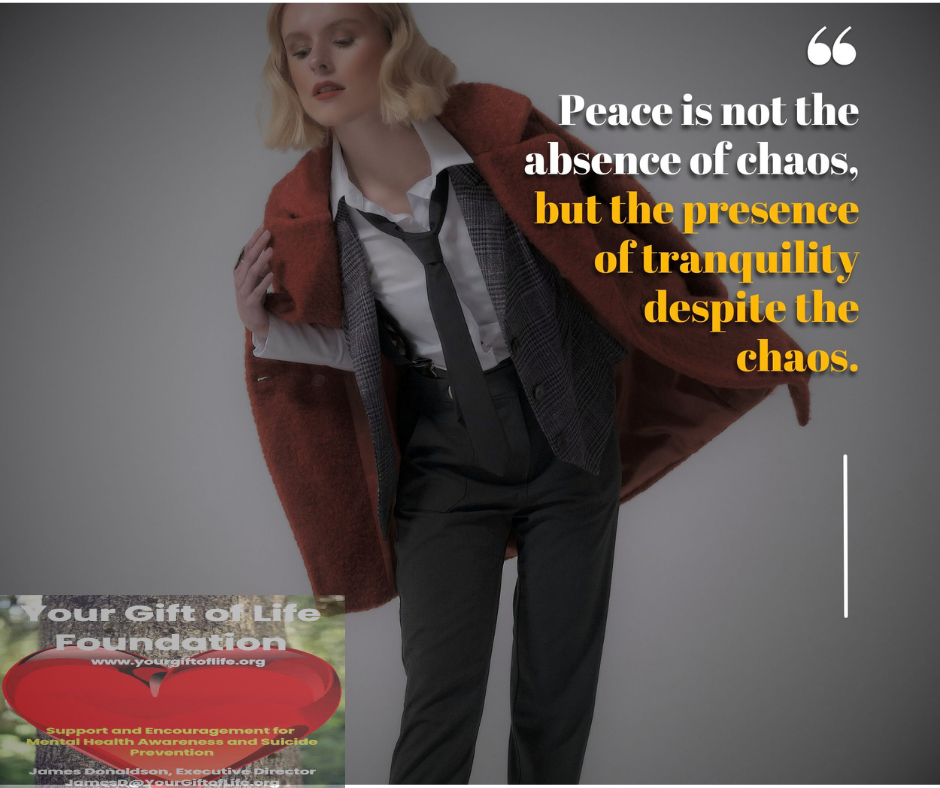
"Peace is not the absence of chaos, but the presence of tranquility despite the chaos."
Most of us have spent a significant portion of our lives waiting for peace. Waiting for the difficult situation to resolve. Waiting for the relationship to stabilize. Waiting for the finances to settle. Waiting for the health scare to pass. Waiting for the schedule to open up. Waiting for the noise to stop.
And in that waiting, we have placed peace somewhere outside ourselves -- in a future moment, in a different set of circumstances, in a life that looks less like the one we are actually living. We have made peace conditional. We will be at peace when things calm down. We will be at peace when the problem is solved. We will be at peace when life cooperates.
This quote dismantles that entire framework. Peace is not the absence of chaos. It is the presence of tranquility despite the chaos. It is not something that arrives when the storm ends. It is something you carry into the storm.
The Chaos That Never Fully Clears
Here is the uncomfortable truth that most of us already know but rarely say out loud: the chaos does not fully clear. Not for long. Not permanently.
Life is not a problem to be solved and then enjoyed. It is a continuous unfolding -- sometimes smooth, often turbulent, always changing. One difficulty resolves and another arrives. One season of stress gives way to a brief reprieve and then a new challenge. The circumstances of life are not trending toward a final state of calm. They are cycling, shifting, surprising us, demanding things of us we did not expect.
If peace requires the absence of chaos, then peace is available only in the rare and fleeting moments when nothing is wrong -- and those moments, for most people, are few. A life spent waiting for the chaos to clear is a life spent waiting. And the waiting itself becomes its own kind of suffering.
The invitation in this quote is to stop waiting. Not to stop working toward better circumstances -- that effort is valuable and necessary. But to stop making your inner peace contingent on those circumstances. To find, or build, or cultivate a quality of tranquility that does not depend on the world cooperating.
What Tranquility Actually Is
Transquility is not numbness. It is not the absence of feeling, the suppression of emotion, or the pretense that difficult things are not difficult. A person who has cultivated genuine tranquility still feels grief, still experiences frustration, still notices fear. They are not detached from their experience. They are fully present to it.
What is different is their relationship to it. Tranquility is the capacity to be with what is -- including what is hard -- without being swept away by it. It is the ability to feel the wave without being knocked over by it. To be moved without being destroyed. To be in the storm without becoming the storm.
This is a subtle but profound distinction. The person without tranquility is at the mercy of their circumstances. When things are good, they feel good. When things are bad, they feel bad. Their inner state is a mirror of their outer situation, and they have little capacity to influence that reflection. They are reactive, tossed about, unable to find their footing when the ground shifts.
The person with tranquility has developed an inner stability that is not dependent on outer conditions. They can be in the middle of genuine difficulty -- real loss, real uncertainty, real pain -- and still access something steady within themselves. Not because they are pretending the difficulty is not real, but because they have found something in themselves that is more fundamental than the difficulty. Something that holds.
How Tranquility Is Built
Transquility is not a personality trait you either have or do not have. It is a capacity that is developed through practice -- through the repeated, intentional choice to return to steadiness when the pull toward reactivity is strong.
The practice of presence is foundational. Most of our suffering is not caused by what is actually happening in this moment -- it is caused by our thoughts about what happened in the past and our fears about what might happen in the future. The mind that is fully present to the actual texture of this moment -- not the story it is telling about the moment, but the moment itself -- is far more capable of tranquility than the mind that is living in its own projections. Meditation, mindful breathing, and the simple practice of returning attention to the present when it wanders are all ways of building this capacity.
The practice of perspective is equally important. When we are in the middle of chaos, it tends to feel total -- as if the difficulty is all there is, as if it will last forever, as if it defines everything. Perspective is the ability to hold the difficulty in a larger frame. This is hard. This is real. And it is also not the whole story. It will not last forever. I have been through hard things before and found my way through. There is more to my life than this moment of chaos. This is not denial. It is accuracy -- the chaos is real, and it is also not the entirety of reality.
The practice of acceptance does not mean approving of what is happening or giving up on changing it. It means acknowledging reality as it is, rather than fighting against the fact that it is. Much of our suffering comes not from the difficult thing itself but from our resistance to the fact that the difficult thing is happening. Acceptance -- the willingness to say "this is what is true right now" -- releases the energy that was being spent on resistance and makes it available for response. You cannot effectively address a situation you are refusing to acknowledge.
The practice of grounding -- returning to the body, to the breath, to the physical sensations of the present moment -- is one of the most direct routes to tranquility available to us. When the mind is spinning in chaos, the body is often still. The breath is still happening. The feet are still on the ground. The heart is still beating. Returning attention to these simple physical realities interrupts the spiral of anxious thought and reconnects us to something steady.
Peace as a Choice, Made Repeatedly
One of the most important things to understand about tranquility is that it is not a state you achieve once and then maintain effortlessly. It is a choice -- made repeatedly, often many times in a single day. The chaos pulls. The reactivity rises. The old patterns of anxiety, anger, or despair assert themselves. And in those moments, tranquility is the choice to return. To breathe. To come back to what is steady. To refuse to let the outer storm become the inner one.
This is not always easy. There are days when the chaos is genuinely overwhelming, when the difficulty is real and heavy, when the practice of returning to steadiness feels almost impossible. On those days, tranquility may look less like serenity and more like simply not giving up. Like taking one more breath. Like choosing, one more time, not to be consumed.
That counts. That is the practice. And over time, the practice builds something durable -- a quality of inner stability that becomes more accessible, more natural, more available even in the hardest moments.
The World Needs People Who Have Found This
There is something important to say about the broader significance of this practice. The world is not short on chaos. It is short on people who can be present in the chaos without adding to it -- who can respond rather than react, who can hold steadiness when everyone around them is spinning, who can bring calm into a room rather than amplifying the anxiety already there.
When you cultivate tranquility, you do not just benefit yourself. You become a resource for everyone around you. The parent who can stay calm when the child is in crisis. The leader who can think clearly when the team is panicking. The friend who can be present with someone's pain without being overwhelmed by it. The colleague who can find a way forward when everyone else is stuck in the problem.
This is one of the most valuable things a human being can offer the world: the capacity to be at peace in the middle of chaos. Not because the chaos does not matter, but because peace is more useful than panic. Tranquility is more effective than reactivity. Steadiness serves the situation better than being swept away by it.
You Can Make It Through the Chaos
Whatever chaos you are navigating right now -- whatever storm is present in your life, your relationships, your work, your health, your world -- peace is available to you. Not on the other side of it. In the middle of it.
Not as a feeling that descends when everything is resolved. As a practice you return to, again and again, in the midst of the unresolved.
The chaos may not clear on your timeline. The circumstances may not cooperate. The storm may continue longer than you hoped. But your tranquility does not have to wait for any of that. It is available now. In this breath. In this moment. In the choice to return, one more time, to what is steady within you.
You can make it if you try. And finding peace in the middle of chaos is one of the most powerful things you can try.
Where in your life right now are you waiting for the chaos to clear before you allow yourself to feel peace? What would it look like to choose tranquility in the middle of it?
Explore Topics
Written by
James Donaldson
Content creator and writer sharing insights and stories.