
UCanMakeItIfYouTry - Happiness Can Exist Only in Acceptance
George Orwell -- novelist, essayist, and one of the most clear-eyed observers of the human condition in the twentieth century -- left us one of the most compressed and powerful truths about happiness ever written. Just five words. Happiness can exist only in acceptance. No qualifications. No exceptions. No roadmap beyond the single, radical idea that the path to happiness runs not through changing your circumstances, but through accepting them.
Happiness Can Exist Only in Acceptance
-- George Orwell
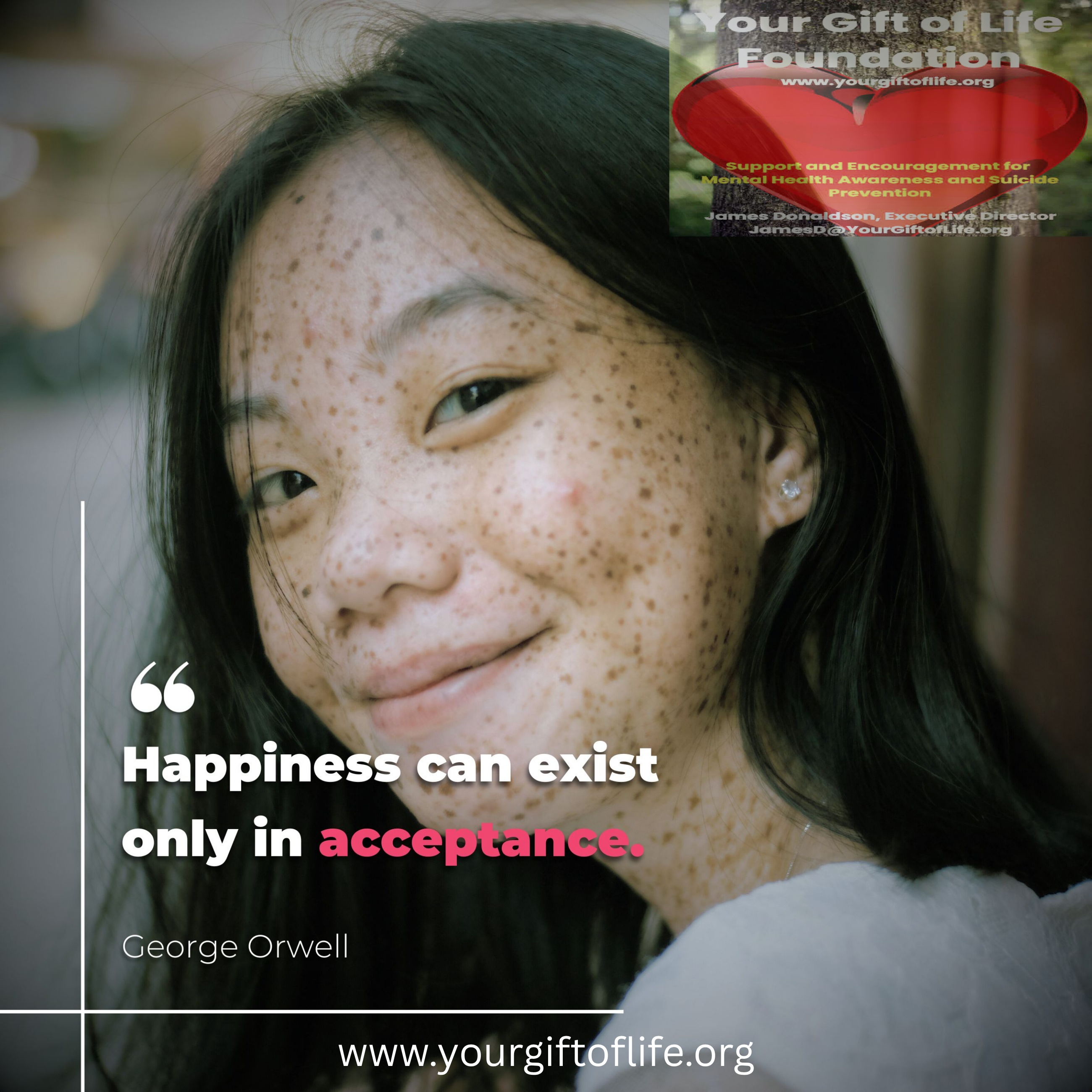
Look at the image that accompanies these words.
A young woman with dark hair and freckles, looking directly at the camera with a quiet, open smile. She is not performing happiness. She is not projecting confidence or projecting anything. She is simply present -- comfortable in her own skin, at ease with what is, radiating the kind of warmth that comes not from having everything figured out but from having made a certain peace with herself and her life.
This is what Orwell is pointing at. Not the happiness that comes from getting what you want. The happiness that comes from accepting what is.
Five Words That Change Everything
George Orwell was not a man known for optimism. He wrote 1984 and Animal Farm -- two of the darkest, most unflinching portraits of human nature and political power ever committed to paper. He lived through poverty, illness, war, and disillusionment. He had every reason to be bitter, and he was not naive.
Which is exactly why these five words carry so much weight.
When a man who saw the world as clearly and as honestly as Orwell did tells us that happiness can exist only in acceptance, he is not offering us a comfortable platitude. He is offering us a hard-won observation. He is telling us something he actually believed, something that survived contact with the full difficulty of human experience.
And what he is telling us is this: the pursuit of happiness through resistance -- through fighting what is, through insisting that things should be different, through refusing to accept the reality in front of us -- is a pursuit that cannot succeed. Not because happiness is impossible, but because we are looking for it in the wrong place.
What We Resist
Most of us spend a significant portion of our inner lives in resistance.
We resist the fact that we are getting older. We resist the fact that a relationship ended, or never began. We resist the fact that our body has limitations, that our career did not go the way we planned, that the people we love make choices we would not make for them. We resist the weather, the traffic, the slow line at the grocery store. We resist the larger griefs and the smaller irritations with equal energy, and we call this resistance by many names -- worry, frustration, resentment, anxiety, regret -- but underneath all of them is the same basic refusal: this should not be this way.
And as long as we are in that refusal, happiness is not available to us. Not because life is too hard, but because we are spending all our energy arguing with it.
Acceptance is not agreement. It is not approval. It is not giving up or giving in. It is simply the willingness to acknowledge what is actually true -- to stop spending energy on the argument that reality should be different than it is, and to redirect that energy toward living fully within the reality that actually exists.
The Paradox of Acceptance
Here is the paradox that trips most people up: accepting things as they are does not mean nothing will ever change. In fact, genuine acceptance is often the precondition for meaningful change.
When we are in resistance -- when we are fighting what is, insisting it should be different, consumed by the gap between what we have and what we want -- we are not actually in a position to change anything. We are too busy arguing with reality to engage with it clearly. Our energy goes into the argument, not the action.
But when we accept -- when we say, clearly and honestly, this is what is true right now -- we free ourselves to respond to what is actually in front of us rather than to the story we are telling about how wrong it is. We can see our options. We can make choices. We can move.
The young woman in the image looks like someone who has done some version of this work. Not someone who has had an easy life, necessarily -- freckles and a quiet smile do not tell you that. But someone who is not at war with herself. Someone who has found, in some measure, the acceptance that Orwell is describing. And in that acceptance, something that looks very much like happiness.
Acceptance and Mental Health
This is not just philosophy. It is one of the most well-supported insights in modern psychology.
Acceptance and Commitment Therapy -- one of the most effective evidence-based approaches to mental health treatment -- is built on exactly this foundation. The goal is not to eliminate difficult thoughts and feelings, but to change our relationship to them. To stop fighting them, arguing with them, trying to make them go away -- and instead to accept their presence while choosing to act in accordance with our values anyway.
Research consistently shows that psychological flexibility -- the ability to accept what is, including what is painful, without being controlled by it -- is one of the strongest predictors of mental health and wellbeing. Not the absence of difficulty. Not the achievement of ideal circumstances. The acceptance of what is, combined with the freedom to choose how to respond.
Orwell got there in five words. The science took a little longer.
The Practice of Acceptance
Acceptance is not a one-time decision. It is a practice -- something you return to, again and again, in the small moments and the large ones.
It is the breath you take before reacting to the thing that frustrated you. It is the moment you stop arguing with the diagnosis, the breakup, the disappointment, and start asking: given that this is true, what do I want to do? It is the willingness to be where you are, as you are, without the constant background noise of how things should be different.
It is not easy. But it is available. And according to Orwell -- and to the evidence of human experience across centuries -- it is the only place happiness actually lives.
You Can Make It
Whatever you are resisting today -- whatever reality you are arguing with, whatever gap between what is and what you wish were true is consuming your energy -- Orwell's five words are an invitation.
Accept it. Not because it is good, or fair, or what you would have chosen. But because acceptance is the door through which happiness enters. Because the energy you are spending on the argument could be spent on living. Because the young woman in the image is showing you something real: that peace, and warmth, and genuine happiness are available on the other side of acceptance.
You can make it -- and acceptance is how you begin.
Your Gift of Life Foundation is dedicated to mental health awareness, resilience, and the belief that acceptance -- of ourselves, our circumstances, and each other -- is the foundation of genuine wellbeing. Visit us at www.yourgiftoflife.org.
Explore Topics
Written by
James Donaldson
Content creator and writer sharing insights and stories.


